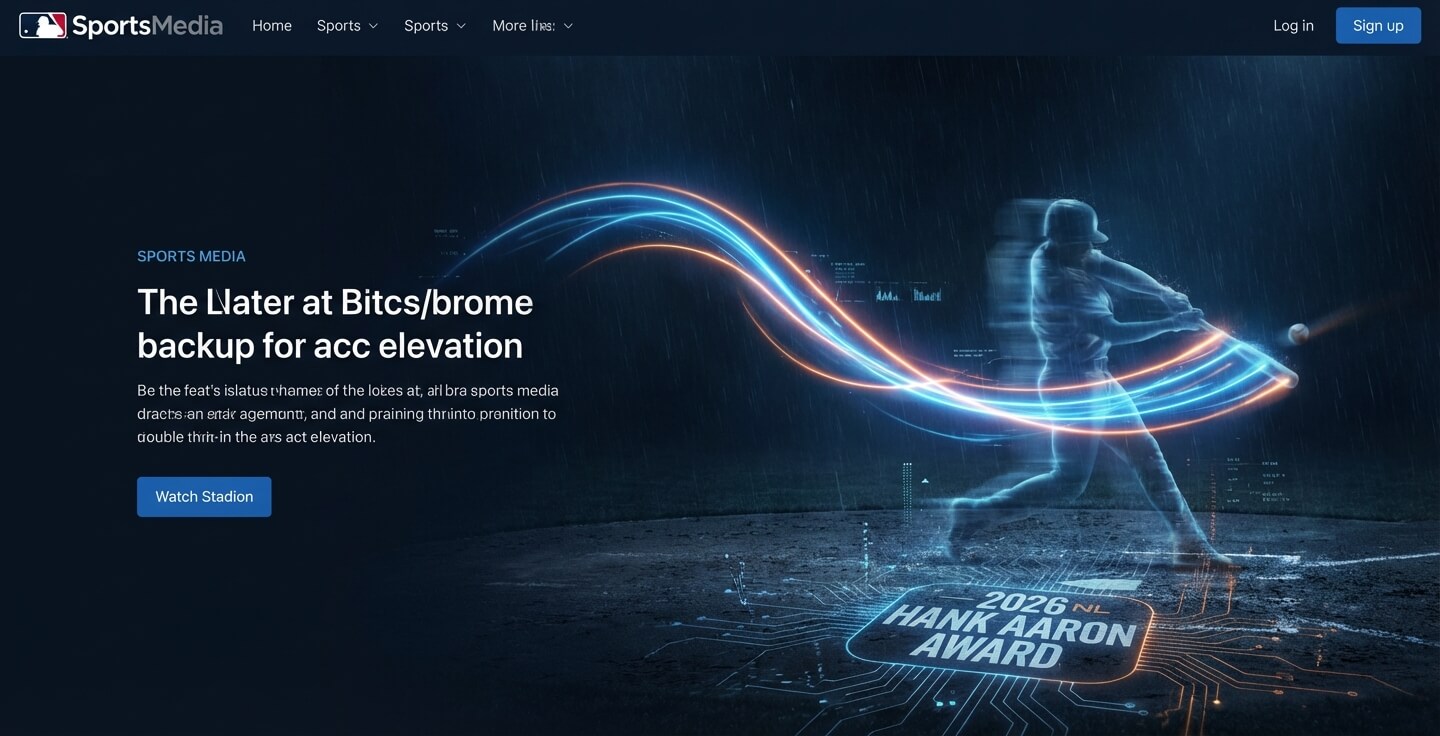
Predicting the 2026 NL Hank Aaron Award Winner: Who Will Dominate?
The Hank Aaron Award celebrates baseball's most outstanding offensive performer in each league, a testament to power, precision, and relentless production at the plate. As we look ahead to the 2026 MLB season, the National League is brimming with talent, making the race for this prestigious honor incredibly exciting. From established MVPs to surging young stars, a compelling cast of players will vie for offensive supremacy. Join us as we break down the contenders, analyze key statistics, and forecast who might etch their name into history as the 2026 NL Hank Aaron Award winner.
Understanding the Hank Aaron Award: A Benchmark for Offensive Excellence
Before diving into predictions, it's crucial to understand what the Hank Aaron Award represents and how its winners are typically chosen. Established in 1999 to commemorate the 25th anniversary of Hank Aaron breaking Babe Ruth's all-time home run record, this award recognizes the "most outstanding offensive player" in both the American and National Leagues.
Unlike the MVP, which considers overall value including defense and base running, the Hank Aaron Award focuses almost exclusively on batting prowess. It's a pure celebration of hitting, power, and run production.
Award Criteria and Illustrious History
The selection process for the Hank Aaron Award involves a unique blend of fan voting and input from a panel of Hall of Fame players. This combination ensures that both popular appeal and expert baseball insight contribute to the final decision. While specific criteria aren't explicitly published like for a Gold Glove, historical winners consistently showcase:
- Elite Power: High home run totals and slugging percentages are paramount.
- Consistent Hitting: A strong batting average and on-base percentage demonstrate overall plate discipline.
- Run Production: Leading the league in RBIs and runs scored often correlates with winning the award.
- Impact on Team Offense: The winner is almost always the driving force behind their team's scoring.
Past NL winners include legendary figures and modern titans like Albert Pujols, Barry Bonds, Ryan Braun, Giancarlo Stanton, Christian Yelich, Freddie Freeman, and Ronald Acuña Jr. These players didn't just have good seasons; they had historically dominant offensive campaigns.
The Unique Voting Process
The winner is determined through a two-phase process: a fan vote on MLB.com and a panel of Hall of Fame players. This dual approach aims to balance public enthusiasm with the seasoned judgment of baseball legends. Fan voting counts for a portion of the overall decision, giving the general public a direct say, while the Hall of Famers provide the expert perspective, often focusing on comprehensive statistical excellence and impact.
To win, a player generally needs to lead or be near the top of the league in multiple key offensive categories, capturing both the attention of the fans and the respect of the baseball elite. You'll see that players who win this award often finish high in MVP voting, sometimes even winning both in the same season, underscoring their offensive supremacy.
Key Metrics Defining Batting Excellence for the Hank Aaron Award
When evaluating potential Hank Aaron Award winners, certain statistical categories consistently stand out. These aren't just good numbers; they represent comprehensive offensive dominance. For 2026, we'll be scrutinizing players based on their projected performance in these critical areas:
- Home Runs (HR): The most straightforward measure of power. Winners are almost always among the league leaders.
- Runs Batted In (RBI): Indicates a player's ability to drive in runs, often a reflection of clutch hitting and lineup protection.
- Batting Average (AVG): While some power hitters sacrifice average, a strong AVG alongside power signals a complete hitter.
- On-Base Percentage (OBP): Reflects a player's ability to get on base, vital for setting up scoring opportunities.
- Slugging Percentage (SLG): Measures total bases per at-bat, highlighting power production beyond just home runs.
- On-Base Plus Slugging (OPS): A combined measure of OBP and SLG, widely considered a strong indicator of overall offensive value.
- Weighted Runs Created Plus (wRC+): A more advanced metric that adjusts for ballpark and league factors, providing a context-neutral measure of offensive production. A wRC+ of 100 is league average; 150+ is elite.
A typical Hank Aaron Award winner will not only excel in one or two of these categories but will post elite numbers across the board, demonstrating a comprehensive offensive toolkit. You'll often see them ranking in the top 5 in HR, RBI, and OPS, with a very respectable AVG and OBP.
Top Contenders for 2026: A Glimpse at the Elite Class
The National League's offensive landscape is incredibly rich, featuring a mix of established legends, players entering their prime, and electrifying young talent. For the 2026 Hank Aaron Award, the competition will be fierce. We categorize our top contenders into three groups: the established superstars who consistently perform, the rising stars poised for a breakthrough, and the dark horses who could surprise everyone.
Understanding the context of their teams and divisions is also key. Playing in hitter-friendly parks or being surrounded by other strong hitters can boost a player's opportunities for RBIs and runs scored. Conversely, carrying an entire offense on one's shoulders in a weaker lineup can make individual achievements even more impressive.
Established Superstars: The Consistent Threat
These are the perennial MVP candidates, the players who have already proven their ability to put up historic offensive seasons. By 2026, many of them will still be firmly in their prime or showcasing incredible longevity. You know their names, and you expect greatness every time they step to the plate.
Ronald Acuña Jr. (Atlanta Braves)
Ronald Acuña Jr. has already cemented his place as one of baseball's most electrifying talents. His 2023 MVP season, featuring a historic 40-70 campaign, demonstrated a blend of power, speed, and hitting that is nearly unmatched. By 2026, Acuña will be 28, arguably still in the absolute peak of his athletic prime. His ability to hit for average, blast prodigious home runs, steal bases, and score runs in bunches makes him a perpetual threat for any offensive award.
The Braves' potent lineup consistently provides him with protection and runners to drive in, further boosting his RBI potential. If he maintains his health and aggressive plate approach, you can expect Acuña Jr. to be at the forefront of the Hank Aaron Award conversation.
- Strengths: Elite power, game-changing speed, high OBP, consistent contact.
- Potential 2026 Stat Line: .305 AVG, 40 HR, 105 RBI, .980 OPS, 50+ SB.
Mookie Betts (Los Angeles Dodgers)
Mookie Betts is the epitome of an all-around superstar, and his offensive contributions are consistently elite. Whether leading off or batting in the heart of the order, Betts combines power, contact, and patience to rack up incredible numbers. By 2026, Betts will be 33, but his game has shown remarkable adaptability, including a move to the infield that speaks to his athleticism and baseball IQ. His smooth swing, plate discipline, and ability to hit for power to all fields make him a perennial threat.
Playing in the Dodgers' star-studded lineup ensures he always has quality hitters around him, leading to plenty of RBI opportunities and pitches to hit. Betts’ consistency and high baseball IQ make him a strong, reliable candidate.
- Strengths: Elite contact, consistent power, high OBP, excellent plate discipline.
- Potential 2026 Stat Line: .290 AVG, 35 HR, 95 RBI, .950 OPS.
Juan Soto (New York Mets / Other NL Team?)
Juan Soto's elite plate discipline and prodigious power are a combination rarely seen in baseball. His ability to draw walks at an unprecedented rate, coupled with his capacity to drive the ball out of any park, makes him an offensive force. Heading into 2026, Soto will likely be 27 years old, hitting his absolute peak. The question of which NL team he'll be playing for by then (Mets, Dodgers, Padres, etc.) is a major storyline, but his production is almost certainly portable.
Soto consistently posts an OBP north of .400, a stat that Hank Aaron Award voters and baseball purists deeply appreciate. His home run totals are high, and his ability to impact games with one swing is undeniable. He's a textbook candidate for the award.
- Strengths: Unparalleled plate discipline, elite OBP, raw power, clutch hitting.
- Potential 2026 Stat Line: .285 AVG, 42 HR, 110 RBI, .420 OBP, 1.000 OPS.
Freddie Freeman (Los Angeles Dodgers)
Freddie Freeman is the embodiment of consistent offensive excellence. His sweet left-handed swing produces extra-base hits with ease, and he's one of the best pure hitters in the game. By 2026, Freeman will be 36, but his game is built on hitting prowess and discipline, which often age gracefully. He consistently posts high batting averages, solid home run totals, and elite OBP, making him a cornerstone of any lineup.
As part of the Dodgers' potent offense, Freeman gets ample opportunities to drive in runs and is rarely pitched around. His ability to perform under pressure and his calm demeanor make him a favorite among voters and a consistent producer for his team.
- Strengths: Elite contact, gap power, high AVG and OBP, clutch hitting.
- Potential 2026 Stat Line: .315 AVG, 28 HR, 90 RBI, .920 OPS.
Comparative Offensive Projections: Established Superstars (2026)
Here's a look at how these titans might stack up against each other in the 2026 season based on their career trends and anticipated performance:
| Player | Team (Proj.) | Age (2026) | Proj. AVG | Proj. HR | Proj. RBI | Proj. OBP | Proj. SLG | Proj. OPS |
|---|---|---|---|---|---|---|---|---|
| Ronald Acuña Jr. | ATL | 28 | .305 | 40 | 105 | .395 | .585 | .980 |
| Mookie Betts | LAD | 33 | .290 | 35 | 95 | .380 | .570 | .950 |
| Juan Soto | NYM/Other | 27 | .285 | 42 | 110 | .420 | .580 | 1.000 |
| Freddie Freeman | LAD | 36 | .315 | 28 | 90 | .390 | .530 | .920 |
As you can see, each of these players brings a different offensive profile to the table, yet all are capable of a Hank Aaron-winning season. Soto's elite OBP and projected HR/RBI combination make him particularly compelling, while Acuña's all-around dynamism is hard to ignore.
Rising Stars: Poised for a Breakout in 2026
Compare Best Odds →Beyond the established names, the National League boasts a thrilling crop of young talent who are either currently performing at a high level or on the cusp of true superstardom. By 2026, many of these players will be entering their prime, making them prime candidates for an offensive explosion worthy of the Hank Aaron Award.
Corbin Carroll (Arizona Diamondbacks)
Corbin Carroll exploded onto the scene, winning NL Rookie of the Year with a dynamic blend of speed and surprising power. By 2026, Carroll will be 25 years old, with several seasons of experience under his belt. His contact skills, ability to hit for extra bases, and game-changing speed make him a top-of-the-order threat. As his body matures and he gains more strength, his home run totals are expected to climb, pushing him into elite offensive territory.
If he can maintain a high batting average and continue to improve his power numbers, Carroll could easily become the offensive face of the NL West. The Diamondbacks' offense is also projected to be strong, providing him with more RBI chances.
- Strengths: Elite speed, high contact, growing power, great defense.
- Potential 2026 Stat Line: .285 AVG, 30 HR, 80 RBI, .370 OBP, .550 SLG.
Elly De La Cruz (Cincinnati Reds)
Elly De La Cruz is a unique talent with truly jaw-dropping raw tools: elite speed, massive power, and a cannon arm. While his rookie season showed flashes of brilliance mixed with some inconsistency, by 2026, at 24 years old, he could have significantly refined his plate approach and decision-making. If he harnesses his immense talent and reduces strikeouts, his ceiling is astronomical.
Playing in the hitter-friendly confines of Great American Ball Park in Cincinnati will always boost his home run potential. If De La Cruz puts it all together for a full season, his power-speed combination could lead to numbers rarely seen, making him a dark horse with MVP potential.
- Strengths: Elite raw power, game-breaking speed, high ceiling.
- Potential 2026 Stat Line: .260 AVG, 38 HR, 100 RBI, .340 OBP, .540 SLG.
Michael Harris II (Atlanta Braves)
Another dynamic outfielder from the Braves, Michael Harris II, offers a compelling blend of speed, contact, and developing power. By 2026, Harris will be 25, firmly established as a cornerstone of Atlanta's lineup. While perhaps not possessing the raw power of some others, his ability to hit for average, rack up extra-base hits, and get on base makes him an incredibly valuable offensive player. Expect his home run totals to continue their upward trend.
His presence in the same lineup as Acuña Jr. means consistent RBI opportunities and less pressure to carry the offense alone, allowing him to focus on his strengths. If he takes a step forward in power, he could be a surprise contender.
- Strengths: High contact, excellent speed, gap power, strong defense.
- Potential 2026 Stat Line: .295 AVG, 25 HR, 85 RBI, .360 OBP, .500 SLG.
The Dark Horses: Unexpected Surges
Every year, there's a player who defies expectations and puts together a career-best season. Identifying these dark horses is tough, but they often represent players with untapped potential, a new approach, or a change of scenery. For the 2026 Hank Aaron Award, we're looking at players who might elevate their game to an elite level.
Nolan Gorman (St. Louis Cardinals)
Nolan Gorman has immense raw power from the left side, hitting towering home runs when he connects. His challenge has been consistency and contact. However, by 2026, at 26 years old, if he can make significant strides in his plate discipline and reduce his strikeout rate, his home run and RBI totals could explode. The Cardinals typically have a solid lineup, which would provide him ample opportunities to drive in runs. If the contact skills catch up to the power, he's a serious threat.
- Strengths: Elite raw power, home run potential.
- Potential 2026 Stat Line: .250 AVG, 40 HR, 100 RBI, .330 OBP, .560 SLG.
Seiya Suzuki (Chicago Cubs)
Seiya Suzuki has shown flashes of elite offensive potential since coming to MLB, combining good contact with solid power. By 2026, at 31, he will be a veteran presence and could be entering a sustained peak if he continues to adapt to MLB pitching. If he can maintain a high batting average and convert more of his doubles power into home runs, particularly in the friendly confines of Wrigley Field, he could put together a Hank Aaron-worthy season. His disciplined approach at the plate suggests a high floor for his offensive production.
- Strengths: Good contact, solid power, plate discipline.
- Potential 2026 Stat Line: .290 AVG, 30 HR, 90 RBI, .370 OBP, .520 SLG.
Factors Influencing Batting Performance Beyond Talent
While talent is paramount, several external and internal factors can significantly impact a player's offensive output in any given season. For the 2026 Hank Aaron Award race, these considerations could mean the difference between a great season and an award-winning one.
Ballpark Effects and Home Field Advantage
Playing your home games in a hitter-friendly ballpark can undeniably inflate offensive statistics. For example, players like Elly De La Cruz in Cincinnati's Great American Ball Park or those who hit well at Coors Field (Colorado Rockies, though they rarely have Hank Aaron candidates) have a natural boost to their power numbers. Conversely, playing in a pitcher's park like Petco Park (San Diego Padres) can make offensive achievements even more impressive. You'll find that teams in the NL Central and East often have more hitter-friendly environments than the NL West.
Team Lineup Strength and Protection
A strong supporting cast is crucial for any elite hitter. When surrounded by other dangerous bats, pitchers are less likely to intentionally walk a slugger or pitch around them. This "lineup protection" leads to more hittable pitches and more opportunities to drive in runs. Players like Ronald Acuña Jr. and Freddie Freeman benefit immensely from the deep lineups of the Braves and Dodgers, respectively. A player on a weaker offensive team has to work harder for their numbers, though their individual contributions might stand out more.
Injury Luck and Durability
The best ability is availability. A full, healthy season is almost a prerequisite for winning the Hank Aaron Award. Even minor injuries can sap a player's power or affect their swing mechanics. As we project for 2026, we're assuming a relatively healthy season for our top contenders, but you know that baseball is a grueling sport, and injuries can strike at any time, derailing even the most promising offensive campaigns.
Coaching and Rule Changes
New hitting coaches or changes in organizational philosophy can sometimes unlock hidden potential in players. Similarly, MLB rule changes (like the shift ban, pitch clock, etc.) can have subtle but significant impacts on offensive strategies and player performance. While major rule changes are less likely between now and 2026, any adjustments to the game could favor certain types of hitters.
Historical Precedent: Learning from Past Winners
Looking at past Hank Aaron Award winners provides valuable context for what kind of offensive season it takes to claim the prize. You'll notice a consistent theme: pure, undeniable offensive dominance across multiple categories.
Winners almost invariably lead their league in at least one, if not several, major offensive categories (HR, RBI, AVG, OPS, SLG). They are the engine of their team's offense and often represent the league's most feared bat. It's not just about one impressive stat; it's about the cumulative impact.
Recent NL Hank Aaron Award Winners and Their Stats
Here’s a snapshot of recent NL Hank Aaron Award winners and their standout statistics from their winning seasons. This gives you a clear benchmark for the kind of season our 2026 winner will need to have:
| Year | Winner | Team | AVG | HR | RBI | OBP | SLG | OPS |
|---|---|---|---|---|---|---|---|---|
| 2023 | Ronald Acuña Jr. | ATL | .337 | 41 | 106 | .416 | .596 | 1.012 |
| 2022 | Paul Goldschmidt | STL | .317 | 35 | 115 | .404 | .578 | .981 |
| 2021 | Fernando Tatis Jr. | SDP | .282 | 42 | 97 | .364 | .611 | .975 |
| 2020 | Freddie Freeman | ATL | .341 | 13 | 53 | .462 | .640 | 1.102 |
| 2019 | Christian Yelich | MIL | .329 | 44 | 97 | .429 | .671 | 1.100 |
What can you observe from this table? Acura Jr.'s 2023 season is a prime example of modern offensive dominance, featuring high AVG, HR, RBI, and an elite OPS. Goldschmidt showcased incredible consistency, while Tatis Jr. provided raw power. Freeman and Yelich displayed the ability to hit for high average and immense power. Our 2026 winner will likely need to produce numbers in a similar range to these historical benchmarks.
My Bold Prediction for the 2026 NL Hank Aaron Winner
After carefully analyzing the established superstars, the surging young talents, and the critical factors that contribute to offensive excellence, my prediction for the 2026 NL Hank Aaron Award winner is Juan Soto.
By 2026, Soto will be 27 years old, precisely when many elite hitters reach their absolute prime. His unparalleled plate discipline, which results in exceptionally high on-base percentages, combined with his generational raw power, makes him the perfect candidate. He consistently forces pitchers to throw him strikes, and when they do, he punishes the ball.
Regardless of his team (though a move to a big market NL club with a strong lineup would only amplify his opportunities), Soto's ability to combine a .400+ OBP with 40+ home runs and 100+ RBIs is a recipe for Hank Aaron Award success. He is a pure hitter with incredible strategic value, and his projected 2026 stat line (e.g., .285 AVG, 42 HR, 110 RBI, .420 OBP, 1.000 OPS) would easily put him among the historical winners. You simply can't ignore a player who consistently performs at this elite level, season after season, especially as he hits his peak.
Frequently Asked Questions About the Hank Aaron Award
How is the Hank Aaron Award different from the MVP Award?
The Hank Aaron Award focuses solely on offensive performance, recognizing the "most outstanding offensive player." The MVP (Most Valuable Player) Award considers a player's overall value, including their offensive production, defensive contributions, base running, and leadership qualities, making it a more comprehensive honor.
Can a pitcher win the Hank Aaron Award?
While some pitchers are excellent hitters (especially in the NL before the universal DH), the Hank Aaron Award is designed for position players who are everyday offensive threats. A pitcher's limited plate appearances would make it nearly impossible to accumulate the volume of offensive statistics required to win.
What makes a strong candidate for the Hank Aaron Award?
A strong candidate typically leads their league or ranks exceptionally high in multiple key offensive categories: home runs, runs batted in, batting average, on-base percentage, slugging percentage, and OPS. Consistency throughout the season and impactful hitting in crucial situations are also important factors.
How often does the MVP also win the Hank Aaron Award?
It happens quite frequently. Since the Hank Aaron Award's inception, many players have won both in the same season, including Ronald Acuña Jr. (2023), Paul Goldschmidt (2022), and Freddie Freeman (2020). This underscores that the most outstanding offensive player is often also the most valuable player overall.
Where can I watch these potential 2026 Hank Aaron Award winners?
You can follow these players throughout the MLB season on regional sports networks covering their respective teams, national broadcasts on ESPN, FOX, TBS, and MLB Network, or via streaming services like MLB.TV. Pay close attention to their offensive output as the 2026 season unfolds!
Conclusion: The Thrill of the Chase in 2026
See Our Top Pick →Predicting the 2026 NL Hank Aaron Award winner is a captivating exercise, highlighting the incredible offensive talent set to grace National League ballparks. From the consistent dominance of superstars like Ronald Acuña Jr. and Mookie Betts to the sky-high potential of rising stars such as Corbin Carroll and Elly De La Cruz, the competition will be fierce. Our projection leans towards Juan Soto's unparalleled combination of plate discipline and power, but baseball's beauty lies in its unpredictability. You'll want to follow every at-bat, every home run, and every game as these elite hitters battle for offensive supremacy. The 2026 season promises another thrilling chase for the game's ultimate batting honor.