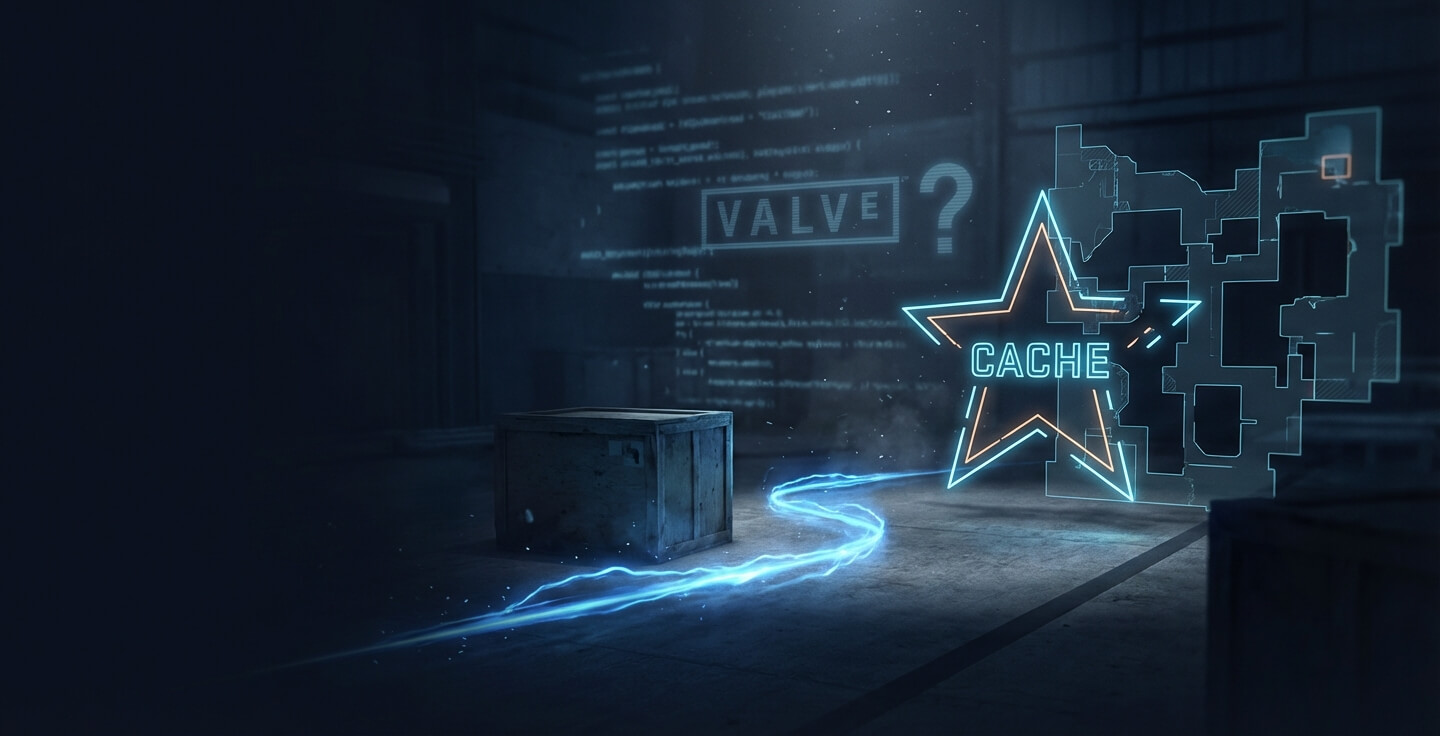
Will Cache Return to the CS2 Map Pool? Analyzing Valve's Next Move
The competitive landscape of Counter-Strike 2 is constantly evolving, with Valve making deliberate choices about its active duty map pool. Among the most discussed topics is the potential return of de_Cache, a legendary map that has left an indelible mark on the esports scene. Many players and professional organizations are eagerly awaiting its comeback, while others speculate on what its reintroduction might mean for the game's balance. You're likely wondering: will Cache truly return, and if so, when? Let's dive deep into the factors influencing Valve's decisions and predict the future of this iconic map.
The Legacy of de_Cache: From Staple to Sidelines
Before we can speculate on its future, it’s crucial to understand Cache’s storied past. For years, de_Cache was a cornerstone of competitive Counter-Strike, known for its balanced layout and strategic depth. Its eventual removal sparked a significant debate, leaving a void that many believe has yet to be truly filled.
Cache's Origins and Peak Performance
Designed by Sal "Volcano" Garozzo and Shawn "FMPONE" Snelling, de_Cache quickly rose to prominence after its official introduction into the competitive map pool in Counter-Strike: Global Offensive. It was celebrated for its balanced design, offering equal opportunities for both Terrorist and Counter-Terrorist sides. The map featured two distinct bomb sites, A and B, connected by a relatively open middle area that often became the focal point of skirmishes. Its layout facilitated diverse strategies, rewarding both aggressive pushes and patient setups.
During its peak, Cache was a favorite among professional players and analysts alike. It produced some of the most memorable moments in CS:GO history, with countless clutches, executes, and comebacks. Its design was considered near-perfect, providing clear lines of sight, varied cover, and predictable rotations, which allowed teams to showcase their tactical prowess and individual skill.
- Balanced Gameplay: Both sites and the middle offered fair advantages.
- Strategic Depth: Rewarded intricate executes and strong utility usage.
- High Skill Ceiling: Favored teams with superior aim and coordination.
Why Cache Was Removed and Its Subsequent Rework
In 2019, much to the dismay of the community, Valve decided to remove Cache from the active duty map pool, replacing it with Vertigo. The primary reason cited for its removal was the need for a visual and gameplay overhaul. While the map was highly regarded, its aesthetic was starting to feel dated, and minor balance issues had crept in over time. Valve's philosophy often involves rotating maps out for a refresh, allowing developers to address community feedback and update them to contemporary standards.
Following its removal, FMPONE, the co-creator, undertook a significant visual and minor layout rework. The updated version, often referred to as the "new Cache," featured a more vibrant, post-apocalyptic aesthetic, improved visibility, and subtle adjustments to critical areas like the T-main entrance and mid. This new version was eventually released to the community in scrimmage and casual modes, allowing players to experience the refreshed layout. The rework aimed to modernize Cache while preserving the core gameplay that made it a fan favorite, making it an ideal candidate for future competitive play.
Despite the rework, Cache has remained outside the official competitive rotation, leading to a consistent clamor for its return, especially now with the transition to Counter-Strike 2. The community is eager to see how the new engine's capabilities, such as volumetric smoke and improved lighting, would interact with Cache's familiar yet refreshed design.
Understanding the CS2 Active Duty Map Pool
The current map pool in Counter-Strike 2 is a blend of beloved classics and newer additions, each bringing a unique set of challenges and strategic opportunities. Valve's decisions regarding which maps to include are complex, balancing tradition with innovation, and aiming for a diverse competitive experience.
Current Map Selection and Meta
As of late 202X (adjust date as needed to be current), the active duty map pool in CS2 consists of:
- Mirage: A timeless classic, heavily balanced, known for its straightforward design.
- Inferno: Characterized by close-quarters combat and intricate bombsite layouts.
- Nuke: A unique multi-level map, challenging for teams to master.
- Vertigo: A high-rise construction site, demanding vertical awareness and distinct strategies.
- Ancient: An Aztec-themed map with dense jungle and stone structures, emphasizing utility and map control.
- Anubis: A visually stunning Egyptian-themed map, known for its intricate waterways and multiple entry points.
- Overpass: Features a blend of open spaces and tight corridors, with a dynamic flow.
This selection shapes the competitive meta significantly. Teams must be proficient across various map types, from the open expanses of Ancient to the verticality of Vertigo. The current pool offers a good mix of T-sided and CT-sided maps, encouraging diverse playstyles and fostering tactical innovation. However, some argue that the pool lacks a truly "neutral" map, a role Cache often filled.
Valve's Philosophy on Map Selection
Valve's approach to the active duty map pool isn't arbitrary. It typically follows several key principles:
- Competitive Balance: Ensuring maps offer fair opportunities for both sides and are not heavily skewed.
- Strategic Diversity: Providing a range of map layouts that demand different tactics, utility usage, and team compositions.
- Visual Fidelity and Performance: Maps must meet current graphical standards and run smoothly across various hardware configurations.
- Community Engagement: While not always directly apparent, community feedback, pro player sentiment, and map popularity often play a role in long-term decisions.
- Innovation and Refresh: Periodically rotating maps allows for updates, reworks, and the introduction of new experiences, keeping the game fresh.
The transition to CS2 itself marked a massive undertaking, requiring all maps to be optimized for the new Source 2 engine. This process isn't just a simple port; it often involves rebuilding, refining, and sometimes subtly altering maps to fit the new physics, lighting, and smoke mechanics. Understanding this meticulous process is key to predicting when a map like Cache might be deemed ready for prime time.
Here's a quick look at the pros and cons of the current active duty maps, providing context for where Cache might fit in:
| Map | Key Strengths | Key Weaknesses | Meta Impact |
|---|---|---|---|
| Mirage | Extremely balanced, classic layout, diverse strategies. | Can feel predictable, relies heavily on utility. | Staple of competitive play, good for aim duels. |
| Inferno | Close-quarters combat, distinct bomb sites, high utility usage. | CT-sided tendencies, challenging retakes. | Rewards aggressive CT play and precise executes. |
| Nuke | Unique verticality, challenging rotations. | Heavily CT-sided, requires strong communication. | Punishes weak coordination, favors methodical play. |
| Vertigo | Vertical gameplay, quick rotations, open B site. | Controversial for some players, less traditional. | Emphasizes fast-paced play, unique angles. |
| Ancient | Complex jungle environment, good cover, utility heavy. | Visibility issues for some, can be CT-sided. | Rewards tactical utility use and map control. |
| Anubis | Multiple entry points, distinct B site, visually appealing. | Can be complex to learn, rotations can be long. | Favors creative tactics and precise timing. |
| Overpass | Mix of open and tight spaces, dynamic flow, strong B site. | Can be T-sided with strong pushes, long rotations. | Rewards aggressive pushes and dynamic play. |
The Case for Cache's Return: Why Fans and Pros Want It Back
The desire for Cache's reintroduction into the active duty map pool is not merely nostalgia. There are compelling reasons, both from the community and a competitive standpoint, that advocate for its return to the forefront of CS2.
Community Demand and Nostalgia
Few maps evoke the same level of attachment and excitement as Cache. Its consistent presence in the competitive scene for years forged deep connections with players. For many, Cache represents a golden era of CS:GO, a time of familiar strategies and beloved esports moments. The collective memory of pro plays on Cache fuels a powerful demand for its return.
You'll often see discussions on Reddit, Twitter, and other gaming forums expressing a strong desire for Cache. This isn't just casual players; content creators, streamers, and even professional players frequently voice their hopes. This persistent community sentiment is hard for Valve to ignore entirely, as player engagement is crucial for the long-term health of the game. A returning classic like Cache could generate significant hype and bring back players who miss its unique gameplay.
Strategic Diversity and Gameplay Impact
From a competitive perspective, Cache offers a strategic profile that is somewhat missing in the current pool. It's often described as a "fair" map, balancing both aggressive and passive playstyles for both sides. Its middle control is paramount, influencing both bomb sites significantly. This contrasts with maps like Nuke (CT-sided) or some iterations of Inferno (often T-sided).
- Strong Mid Control: Cache’s middle offers crucial access to both sites, demanding constant skirmishes and utility usage.
- Balanced A & B Sites: Both bomb sites are defensible but also have clear execute paths for Terrorists.
- Rotational Options: Multiple paths for quick rotations mean teams need excellent communication and timing.
Reintroducing Cache would shake up the meta in a healthy way. Teams would need to develop entirely new strategies or adapt old ones for CS2's mechanics. It would add another layer of complexity to map vetos and picks, pushing teams to demonstrate proficiency across an even wider range of tactical scenarios. For you, the viewer, it means more exciting and varied matches to watch.
FMPONE Updates and CS2 Readiness
A significant factor in Cache’s potential return is the ongoing work by FMPONE. The map designer has been actively showcasing updates and progress on a CS2-compatible version of Cache. These updates are crucial because they demonstrate that the map isn't just a nostalgic dream; it's a living project being refined for the new engine.
FMPONE's commitment means that Valve wouldn't be starting from scratch. A community-vetted and actively developed version of Cache for CS2 would significantly reduce the development burden on Valve. These updates often include:
- Source 2 Optimization: Ensuring the map performs well with the new engine's rendering and physics.
- Improved Visuals: Leveraging CS2's superior lighting and textures.
- Minor Gameplay Tweaks: Addressing any areas that might benefit from slight adjustments in the CS2 environment.
- Volumetric Smoke Interactions: Adapting sightlines and utility plays around CS2's dynamic smoke.
The fact that an updated version exists and is being tested by the community outside the active duty pool makes the path to its official return much clearer. It indicates that the map is not just wanted, but potentially ready for competitive scrutiny.
Potential Hurdles and Valve's Roadmap for CS2 Maps
Compare Best Odds →While the arguments for Cache's return are strong, it's essential to consider the obstacles and Valve's broader strategy for Counter-Strike 2. Valve operates on its own timeline, often prioritizing specific development goals that may not always align with immediate community desires.
Valve's Focus on Newer Maps and Balance
One of the primary reasons for the current map pool's composition is Valve's apparent interest in pushing newer or recently reworked maps into the competitive spotlight. Maps like Anubis and Ancient, while having origins in CS:GO, have gained significant competitive traction and serve to diversify the gameplay experience. Introducing fresh blood helps keep the meta from becoming stale and allows Valve to test new design philosophies.
Furthermore, Valve might be keen on ensuring the existing maps are perfectly balanced and optimized for CS2 before introducing a high-profile return like Cache. The initial launch of CS2 faced criticism regarding map optimization and gameplay consistency. It's plausible that Valve wants to solidify the current competitive experience before rocking the boat with a major map pool change. Prioritizing stability and refinement of the current seven maps could delay Cache's comeback.
Balancing the Competitive Ecosystem
A map pool change isn't just about adding a new map; it's about removing one. This means Valve must carefully consider which map to take out to make room for Cache. The decision is rarely easy, as each map has its dedicated player base and professional teams that excel on it. Removing a map can shift the power dynamics of the professional scene, impacting team strategies and player specialties.
Valve needs to ensure the overall balance of the competitive ecosystem remains healthy. A sudden shift could lead to complaints about an unbalanced pool, favoring certain team compositions or playstyles too heavily. They likely analyze:
- Current Map Win Rates: Identifying maps that are too heavily skewed T- or CT-sided.
- Player Engagement: Which maps are most (and least) played in competitive matchmaking.
- Professional Player Feedback: Input from top-tier teams and players on map health.
- Overall Strategic Mix: Does the pool offer enough variety in terms of open vs. close-quarters, vertical vs. horizontal, etc.?
This careful balancing act means that even if Cache is ready, the timing of its reintroduction depends on finding the "right" map to replace, ensuring minimal disruption to the existing competitive environment.
Development Priorities and Timeline
Valve's development cycle for CS2 is notoriously opaque. While community members see game updates and patch notes, the internal priorities and roadmap are rarely shared publicly. The transition from CS:GO to CS2 was a monumental effort, and ongoing development likely includes:
- Bug Fixes and Performance Optimization: Continuous efforts to improve the core game experience.
- New Content: Operations, cases, and other cosmetic or gameplay additions.
- Anti-Cheat Improvements: A constant battle against cheaters is a high priority.
- Future Map Development: Working on entirely new maps or significant reworks of other old maps (e.g., Train, Tuscan, Cobblestone).
Cache, while important to the community, might not be at the top of Valve's internal priority list compared to these other critical areas. The resources required to thoroughly test, integrate, and officially launch Cache into the active duty pool, along with the accompanying marketing and community management, are substantial. It's possible that other, more pressing game development tasks are simply taking precedence.
Considering the need to balance the map pool, here's a speculative table outlining potential map changes that could facilitate Cache's return:
| Map In | Potential Map Out | Reasoning for Replacement | Impact on Pool Diversity |
|---|---|---|---|
| Cache | Vertigo | Vertigo has been controversial; Cache offers more traditional balance. | Adds a 'neutral' map, potentially reducing vertical emphasis. |
| Cache | Anubis | Anubis is a newer map; Valve might rotate it for a refresh or balance. | Replaces a newer, complex map with a well-understood classic. |
| Cache | Ancient | Ancient can be visually dense for some; Cache offers cleaner lines. | Offers a different strategic challenge, potentially less CT-sided. |
| Cache | Overpass | Overpass has seen many iterations; could be due for another rework. | Maintains a good mix of open and closed areas, but with a different flow. |
| Cache | None (Expansion) | Unlikely, but highly desired by community to avoid removing any map. | Increases map pool size, greater strategic depth, longer veto phase. |
The "None (Expansion)" option, while appealing to players, is historically rare for Valve's active duty pool, which typically maintains a fixed number of maps to ensure focused competitive training.
Predicting the Timeline: When Could Cache Return to the Map Pool?
Pinpointing an exact date for Cache's return is impossible due to Valve's secretive development process. However, by examining historical patterns, major event cycles, and current game development trends, we can make an informed prediction about when you might see this classic back in action.
Historical Precedents for Map Rotations
Valve's history with map pool changes in CS:GO offers valuable insights. Map rotations typically occurred:
- Annually or Bi-Annually: Changes were not monthly but often spaced out over several months to a year.
- With Major Operations: New operations often brought new maps or map pool adjustments.
- Leading up to or After Major Championships: To introduce fresh strategies for the next competitive season or to react to tournament performance.
These changes are usually accompanied by substantial game updates, ensuring that any new map is thoroughly integrated and balanced. For CS2, the transition itself was a massive "map update" for the entire pool. Since then, the focus has largely been on refining existing maps and the core gameplay. This suggests that Valve takes its time with map pool decisions, carefully weighing the impact on the competitive scene and general player base.
Major Events and Operations as Triggers
The most likely times for a significant map pool change, such as Cache's return, are around major in-game events or the run-up to a new Major Championship. These events serve as natural inflection points for the game's competitive cycle and are often used by Valve to introduce significant updates.
- Major Championships: The periods directly before or after a CS2 Major are prime opportunities. A new map could be introduced to test teams for the next season of tournaments.
- New Operations: Valve's operations typically introduce new content, missions, and often map experiences (either new maps or older maps returning for casual play). A new operation could be the perfect vehicle for Cache's reintroduction into the competitive pool.
- Significant Game Updates: A large feature update or balance patch that impacts gameplay could also pave the way for a map pool shuffle, ensuring all changes are part of a cohesive update.
The sheer hype generated by a map like Cache returning would also align well with major promotional periods for Valve, maximizing player engagement and media attention.
The Role of Community Feedback and Pro Play
While Valve doesn't always act on every community demand immediately, consistent and vocal feedback, especially from professional players and organizations, holds weight. The unified voice requesting Cache's return is strong and has been sustained over a long period. Valve, being the steward of the game, ultimately wants a thriving esports scene and a satisfied player base.
Additionally, the performance of maps in professional play can influence Valve's decisions. If certain maps are consistently vetoed, or if the competitive meta becomes too stagnant, it might push Valve to introduce a fresh element like Cache to inject new life into the scene. The collective experience and opinions of the top players are invaluable in guiding Valve's long-term competitive strategy.
Speculative Return Window for Cache
Considering all these factors, a realistic speculative return window for Cache to the active duty map pool would likely be in late 2024 to mid-2025. This timeframe allows Valve to:
- Further stabilize and optimize the current CS2 experience.
- Potentially release another major operation that could coincide with a map pool change.
- Allow FMPONE to continue refining the CS2 version of Cache, ensuring it meets Valve's standards.
- Gauge the ongoing competitive meta and identify the "right" map to rotate out.
A return around a major event, such as a hypothetical late 2024 or early 2025 Major, would create maximum impact. While patience is required, the signals from the community and the ongoing development by FMPONE suggest that Cache's return is a matter of "when," not "if."
What to Expect If Cache Returns
When Cache eventually makes its way back to the active duty map pool, it will undoubtedly send ripples throughout the Counter-Strike 2 community. For you, as a player or viewer, understanding the immediate and long-term implications will enhance your experience.
Immediate Meta Shifts and Strategic Adaptations
The reintroduction of Cache would instantly shake up the competitive meta. Professional teams would have to quickly adapt, dusting off old strategies and innovating new ones tailored to CS2's mechanics. Expect a period of intense experimentation and evolving tactics. Teams known for their strong Cache play in CS:GO might find an advantage, while others will have to quickly catch up.
Key areas where you'd see immediate shifts:
- Utility Usage: How smokes, flashes, and molotovs interact with Cache's chokepoints and open areas in CS2 will be crucial.
- Mid Control: The fight for mid on Cache is legendary. Expect intense battles there, potentially leveraging CS2's updated peeker's advantage.
- Rotational Speeds: The speed at which teams can rotate between sites will be vital, impacting the pace of rounds.
- Player Specialization: Certain players who excelled on Cache in CS:GO might find their niche again, leading to exciting individual performances.
The first few tournaments with Cache in the pool will be fascinating to watch, as teams unveil their interpretations of the "new" meta.
Potential Balance Tweaks Post-Release
Even if Cache is thoroughly tested before its official return, it's highly probable that Valve would implement minor balance tweaks shortly after its reintroduction. No map is truly "perfect" on release, especially after a significant engine transition. Community feedback and data from professional matches would provide invaluable information.
These tweaks might include:
- Adjusting sightlines that prove too powerful or too weak.
- Modifying cover or angles that create unintended advantages.
- Refining clipping or boost spots.
- Subtly changing timings for rotations or engagements.
Valve tends to be iterative with map balance, so don't be surprised if you see a "Cache B" or "Cache C" version a few months after its initial comeback, fine-tuning the experience based on live play data.
Impact on the Esports Scene and Viewer Experience
Cache's return would undoubtedly bring a significant boost of excitement to the Counter-Strike 2 esports scene. It would rekindle old rivalries on a familiar battleground and provide a fresh narrative for commentators and analysts. The sheer anticipation would translate into higher viewership for tournaments featuring the map.
For you, the viewer, it means:
- More Diverse Matches: Adding Cache expands the strategic depth and visual variety of competitive play.
- Nostalgia and Freshness: The comfort of a familiar map combined with the excitement of new CS2 mechanics.
- New Star Players: Players who might struggle on current maps could shine on Cache.
- Increased Community Engagement: Debates, discussions, and analysis surrounding Cache's role in the meta would surge.
Ultimately, Cache's return is a win for everyone involved in Counter-Strike, promising renewed excitement and strategic depth for years to come.
FAQ: Your Burning Questions About Cache and the CS2 Map Pool
Is Cache playable in CS2 currently?
Yes, an updated version of Cache for Counter-Strike 2 is available and actively maintained by FMPONE, the map's co-creator. You can play it on community servers or via custom game modes. However, it is not currently part of the official Valve competitive matchmaking or the active duty map pool for esports events.
Who created de_Cache?
de_Cache was co-created by two talented map designers: Sal "Volcano" Garozzo and Shawn "FMPONE" Snelling. FMPONE has been primarily responsible for the subsequent reworks and updates of the map for CS:GO and CS2.
What other classic maps might return to CS2?
Beyond Cache, other popular classic maps frequently discussed for a potential return include de_Train, de_Cobblestone, and sometimes even community favorites like de_Tuscan. Valve's history suggests they might rotate these maps in and out for reworks and refreshes, similar to Cache's situation.
How often does Valve change the map pool?
Valve's map pool changes are not on a fixed schedule. Historically, in CS:GO, changes would occur roughly once every 6-18 months, often coinciding with major game updates, operations, or leading up to a Major Championship. For CS2, the pattern is still being established, but major changes are typically infrequent and deliberate.
Will Cache be changed if it returns to the active duty pool?
It's highly probable. While FMPONE's current CS2 version of Cache is well-received, Valve often makes its own subtle adjustments to maps before officially integrating them into the active duty pool. These changes could be minor balance tweaks, visual optimizations, or adjustments to better fit the CS2 competitive philosophy. Expect an updated, refined version rather than an exact replica of its CS:GO prime.
Conclusion: The Inevitable Return of a Classic?
See Our Top Pick →The question of whether Cache will return to the CS2 map pool isn't a matter of "if," but "when." The overwhelming community demand, Cache's balanced design, its proven competitive history, and FMPONE's ongoing dedication to a CS2-ready version all point towards its eventual reintroduction. While Valve operates on its own timeline, prioritizing game stability and a balanced competitive ecosystem, the void left by Cache is palpable. You can anticipate its return to be a significant event, likely timed with a major update or operation, injecting fresh strategic depth and excitement into Counter-Strike 2. Prepare for the comeback of a legend.