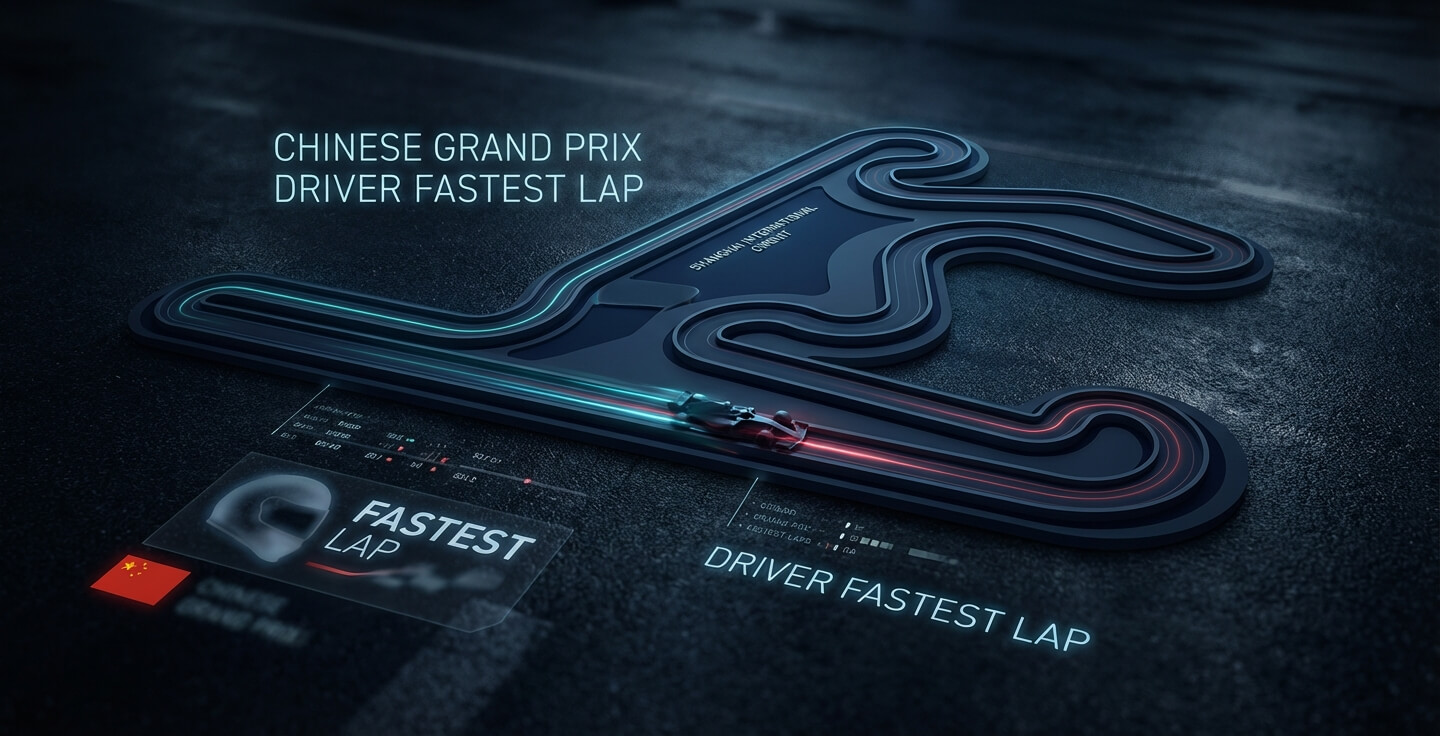
Chinese Grand Prix: Unlocking the Secrets of the Fastest Lap
Welcome to the ultimate guide on the Chinese Grand Prix's fastest lap, where speed meets strategy on one of Formula 1's most distinctive circuits. The Shanghai International Circuit consistently challenges drivers and engineers, pushing the limits of car performance and human skill. Achieving the fastest lap is more than just a bonus point; it's a statement of dominance, a testament to perfect execution, and a crucial element in race strategy. Join us as we dissect what it takes to conquer Shanghai and etch your name into the record books with an unparalleled lap time.
The Shanghai International Circuit: A Fast Lap Blueprint
The Shanghai International Circuit, renowned for its unique 'shang' (meaning 'up' or 'ascend') character resembling the Chinese character for Shanghai, presents a fascinating challenge for any Formula 1 driver aiming for the fastest lap. Opened in 2004, its 5.451-kilometer layout combines incredibly long straights with complex, demanding corner sequences, making car setup a delicate balance between top-end speed and high-downforce stability. It's a circuit that rewards bravery, precision, and an aggressive yet controlled driving style.
The circuit's distinctive layout, designed by Hermann Tilke, starts with the famous Turn 1-4 complex – a seemingly endless, tightening right-hander that tests a driver's neck muscles and the car's front-end grip. This leads into the equally demanding Turn 6-9 sequence, which sets up the crucial back straight, one of the longest in F1 at over 1.1 kilometers. Here, cars reach their absolute top speeds, demanding minimal drag. The challenge then shifts to the heavy braking zone into Turn 14, followed by the final two corners leading back to the start-finish straight. A perfect fastest lap here requires a car capable of both slicing through the air and sticking through the high-g corners.
Key Sections for Speed and Skill
- Turn 1-4 Complex: This spiraling turn is a make-or-break section. Drivers must manage tire wear and maintain momentum. An early mistake here compromises the entire first sector.
- Back Straight: The massive back straight is where teams prioritize outright speed. A strong exit from Turn 13 is paramount to maximize velocity before the heavy braking for Turn 14. This is a prime DRS zone.
- Turns 13-16: These final corners are critical for setting up a strong run onto the main straight. Turn 14 is a significant braking zone, offering an overtaking opportunity and requiring precise entry to carry speed through the subsequent esses.
Mastering these sections is fundamental to achieving a competitive lap time, let alone the fastest lap. Each corner sequence demands a different approach, from aggressive throttle application to delicate steering inputs, all while managing the ever-present challenge of tire degradation.
Weather's Role in Lap Pace
Shanghai's weather can be notoriously unpredictable, adding another layer of complexity to fastest lap attempts. From scorching sun to sudden downpours, track conditions can change rapidly. A cooler track temperature might offer more grip for a one-off flying lap, allowing drivers to push harder. Conversely, a hotter track can lead to increased tire degradation, making sustained pace difficult and often requiring drivers to wait for a clearer track or fresher tires.
Rain is, of course, the ultimate game-changer. Wet conditions drastically reduce grip and demand a completely different driving style and car setup. While it can make for thrilling racing, a true "fastest lap" in the dry is a different beast, showcasing raw car performance and driver skill without the variable of standing water.
Historical Dominance: Who Holds the Fastest Lap Records?
The Chinese Grand Prix has seen some of Formula 1's greatest drivers demonstrate their prowess by setting the fastest race lap. From the early days of its inclusion in the calendar, legends have battled for supremacy on this unique circuit. Achieving the fastest lap often requires a confluence of factors: a perfectly balanced car, fresh tires late in the race, a clear track, and a driver operating at the absolute peak of their abilities. It’s a moment of pure performance, a single lap where everything comes together.
Over the years, names like Michael Schumacher, Lewis Hamilton, and Sebastian Vettel have consistently pushed the boundaries of speed at Shanghai. Their ability to extract the maximum from their machinery, often when it matters most, has contributed to some truly incredible lap times. These records aren't just statistics; they are benchmarks of engineering excellence and driver talent. Understanding who has achieved these feats gives us insight into the characteristics required to dominate this circuit.
All-Time Fastest Laps at Chinese Grand Prix
Below is a table showcasing some of the official fastest race laps set at the Chinese Grand Prix. These times represent moments of peak performance and strategic genius.
| Year | Driver | Team | Fastest Lap Time | Avg. Speed (km/h) |
|---|---|---|---|---|
| 2019 | Pierre Gasly | Red Bull Racing | 1:34.742 | 207.258 |
| 2018 | Daniel Ricciardo | Red Bull Racing | 1:35.785 | 205.003 |
| 2017 | Lewis Hamilton | Mercedes | 1:35.378 | 205.881 |
| 2016 | Nico Hülkenberg | Force India | 1:39.824 | 196.711 |
| 2013 | Sebastian Vettel | Red Bull Racing | 1:36.808 | 202.831 |
| 2011 | Mark Webber | Red Bull Racing | 1:38.993 | 198.375 |
| 2006 | Fernando Alonso | Renault | 1:37.447 | 201.503 |
| 2004 | Michael Schumacher | Ferrari | 1:32.238 | 212.872 |
Note: The official fastest lap for the Chinese Grand Prix is 1:32.238, set by Michael Schumacher in 2004, a record that has stood for an incredibly long time, showcasing the sheer pace of the V10 era cars and Schumacher's mastery.
Engineering the Perfect Lap: Car and Tyre Strategy
Setting the fastest lap isn't solely down to driver skill; it's a profound demonstration of engineering prowess and strategic acumen. The car's setup for the Chinese Grand Prix is a tightrope walk. Teams must decide on a wing level that offers enough downforce for the technical turns without creating excessive drag on the long straights. A car that is too 'slippery' might be fast in a straight line but struggle for grip in the Turn 1-4 complex, leading to slower cornering speeds and increased tire wear.
Tyre strategy is perhaps the most critical component. The softest compound tires are typically reserved for qualifying to extract maximum performance. In the race, however, teams must balance durability with speed. A fastest lap attempt usually occurs late in the race, often after a pit stop where a driver is put on a fresh set of soft compound tires, or occasionally medium compound tires if the softs are proving too fragile. The aim is to find a clear window on track, allowing the driver to push to the absolute limit without traffic impeding their run. This strategic deployment of fresh rubber for a single hot lap can be the difference between gaining a crucial championship point and missing out.
Engine mode settings also play a vital role. For a fastest lap attempt, teams will often deploy maximum engine power, hybrid energy, and energy recovery systems (ERS) in a concerted effort to shave off those crucial tenths of a second. This coordinated effort between driver, strategist, and engineers truly defines the pursuit of the fastest lap.
The Evolution of Speed: From 2004 to Present
Compare Best Odds →Since its inception in 2004, the Chinese Grand Prix has witnessed significant shifts in Formula 1 regulations, car design, and tire technology, all of which have profoundly impacted fastest lap times. The V10 era (2004-2005) produced blistering speeds, epitomized by Michael Schumacher's enduring fastest lap record of 1:32.238. These cars were lightweight, immensely powerful, and incredibly demanding to drive, setting a high bar for speed at Shanghai.
The transition to V8 engines (2006-2013) brought a slight reduction in outright power, but advancements in aerodynamics and chassis design meant that lap times remained fiercely competitive. Drivers during this period, like Fernando Alonso and Sebastian Vettel, continued to push the limits, adapting to less powerful but more aerodynamically sophisticated machines. The introduction of KERS (Kinetic Energy Recovery System) also added a strategic element, allowing for bursts of extra power.
The V6 Turbo Hybrid era, beginning in 2014, marked a revolutionary change. While initially slower due to the complexity and weight of the new power units, continuous development has seen these cars become incredibly efficient and fast. The sheer torque and intricate hybrid systems mean that while top speeds are high, the heavy weight and increased tire sensitivity demand a different kind of precision. The overall lap times have crept closer to and occasionally surpassed the V8 era, though Schumacher's V10 record stands as a testament to that era's raw pace.
Fastest Lap Progressions by Era
This table illustrates how fastest lap times have evolved across different technical regulations at the Chinese Grand Prix, highlighting the impact of major rule changes.
| F1 Era | Key Tech Changes | Representative Fastest Lap Time | Driver | Year |
|---|---|---|---|---|
| V10 (2004-2005) | High-revving naturally aspirated V10s, lightweight chassis | 1:32.238 | Michael Schumacher | 2004 |
| V8 (2006-2013) | Naturally aspirated V8s, KERS introduced, Aero focus | 1:36.808 | Sebastian Vettel | 2013 |
| V6 Turbo Hybrid (2014-Present) | Turbocharged V6s with complex hybrid systems, larger chassis | 1:34.742 | Pierre Gasly | 2019 |
| Ground Effect (2022-) | New aerodynamic regulations for closer racing, larger tires | N/A (as of 2024 - future race) | TBD | TBD |
The progression shows that while the cars have changed dramatically, the challenge of setting a blindingly fast lap at Shanghai remains constant. The relentless pursuit of performance by teams and drivers ensures that new records are always within reach, particularly as regulations evolve and technologies improve.
Why the Fastest Lap Matters: Beyond Bragging Rights
In the high-stakes world of Formula 1, every detail matters, and the fastest lap is no exception. While it might seem like a mere statistic, securing the fastest lap in a Grand Prix can have significant implications, both for individual drivers and for their teams. It's more than just bragging rights; it's a strategic weapon and a psychological boost.
Since 2019, an additional championship point has been awarded to the driver who sets the fastest race lap, provided they finish in the top 10. This single point can be crucial in tight championship battles, sometimes determining the difference between first and second place in the drivers' or constructors' standings. This rule change has elevated the fastest lap from an interesting footnote to a key strategic objective during races, encouraging teams to actively pursue it.
Beyond the point, the fastest lap is a clear demonstration of a car's raw pace and a driver's ability to extract maximum performance. For a team, it validates their engineering efforts and can be a powerful marketing tool. For a driver, it's a statement of intent, proving their speed and confidence, especially if they are not leading the race.
Strategic Timing: When to Go for It
The decision to attempt a fastest lap is a calculated gamble, carefully orchestrated by team strategists. It typically occurs in the final stages of a race, after a driver has made their last pit stop and is on fresh, soft-compound tires. Key factors considered include:
- Clear Track: A driver needs clean air to avoid aerodynamic turbulence from other cars, which can significantly affect lap time. Strategists will look for gaps in traffic.
- Tyre Degradation: The freshest tires offer the most grip. As tires wear, their performance drops, making a fastest lap attempt less viable.
- Fuel Load: As the race progresses, the car's fuel load decreases, making it lighter and inherently faster. A low fuel load combined with fresh tires is the ideal scenario.
- Championship Standings: If a championship battle is tight, the extra point becomes paramount, justifying the risk and expenditure of pushing for it.
- Track Evolution: Sometimes, the track gets faster as more rubber is laid down, offering better grip in the latter stages of the race.
Sometimes, a team might even make an extra pit stop specifically to put a driver on fresh softs for a fastest lap attempt, sacrificing track position but potentially gaining a valuable point.
The Driver's Mindset: Pushing the Limits
For a driver, setting the fastest lap is an intense psychological and physical challenge. It requires immense confidence, unwavering focus, and an almost intuitive understanding of the car's limits. During a fastest lap attempt, drivers are often asked to extract every ounce of performance, pushing harder in areas where they might have been conserving tires or fuel earlier in the race.
- Risk vs. Reward: Drivers must balance the risk of making a mistake with the reward of a single point. A spin or an off-track excursion can ruin the attempt or even lead to retirement.
- Precision: Every braking point, turn-in, and throttle application must be executed with absolute precision. Small errors accumulate into lost tenths.
- Mental Fortitude: The pressure is immense. To perform at this level when every hundredth of a second counts requires exceptional mental fortitude and the ability to ignore fatigue.
Ultimately, the fastest lap is a symphony of engineering, strategy, and unparalleled driving skill, a perfect moment where all elements align to create an untouchable benchmark.
Key Drivers to Watch for a Fastest Lap in Future Chinese GPs
With the Chinese Grand Prix returning to the calendar, the anticipation for new fastest lap heroics is palpable. Several drivers currently on the grid possess the raw speed, precision, and strategic acumen to challenge for the fastest lap at the Shanghai International Circuit. Keep a close eye on these contenders who are consistently at the sharp end of the grid, renowned for their ability to deliver blistering one-off laps.
- Max Verstappen (Red Bull Racing): A formidable force, Verstappen's aggressive driving style and Red Bull's consistently quick machinery make him a prime candidate. He's known for pushing to the absolute limit and extracting incredible pace, especially when given a clear track.
- Lewis Hamilton (Mercedes): A seven-time world champion with immense experience at Shanghai, Hamilton has numerous fastest laps to his name. His precision and ability to manage tires while delivering speed are legendary, making him a perennial threat.
- Charles Leclerc (Ferrari): Leclerc's natural talent for qualifying often translates into incredible race pace. When Ferrari's car is dialled in, his ability to extract performance from soft tires for a single lap is exceptional.
- Lando Norris (McLaren): As McLaren continues to rise, Norris consistently demonstrates impressive one-lap pace. His smooth yet aggressive style could be well-suited to Shanghai's challenging corners.
- George Russell (Mercedes): Russell has proven to be incredibly quick over a single lap. If Mercedes can provide him with a competitive package, he will undoubtedly be in the mix for fastest lap honors.
The dynamic between these drivers and their respective teams will undoubtedly provide thrilling fastest lap battles, especially with the added incentive of a championship point on offer.
Team Dynamics and Fastest Lap Attempts
It's not just the individual driver; the team plays a critical role in facilitating a fastest lap attempt. Team dynamics often dictate which driver gets the opportunity to go for it. For example, if one driver is out of the points or has a significant gap to the car ahead or behind, they might be strategically deployed to make an extra pit stop for fresh soft tires. This allows the team to "sacrifice" track position for one car to secure that crucial extra championship point, especially if their other driver is in a strong points-scoring position.
Communication between the pit wall and the driver is paramount. The team will inform the driver of the current fastest lap, their target time, and provide advice on where they can gain time. Sometimes, a driver already on track might be asked to push harder if their tires are still in good condition and they have a clear run. The decision-making process is a complex interplay of race management, championship aspirations, and car performance data.
The Chinese Grand Prix's unique layout, combined with modern F1's strategic depth, promises exciting fastest lap battles, making it a compelling element of the race to watch for.
FAQ: Your Fastest Lap Questions Answered
What is the official race fastest lap record at the Chinese Grand Prix?
The official fastest race lap record at the Chinese Grand Prix is 1:32.238, set by Michael Schumacher driving for Ferrari in 2004. This incredible time was achieved during the V10 engine era of Formula 1 and remains a benchmark of speed at the Shanghai International Circuit.
How does tyre choice impact a driver's fastest lap potential?
Tyre choice is absolutely critical. Softer compound tyres (e.g., C3, C4, C5 in Pirelli's current range) offer significantly more grip and therefore faster lap times over a short period. However, they also degrade more quickly. A driver attempting a fastest lap will almost always be on the softest available compound, preferably a fresh set, to extract maximum performance for that single, decisive lap. Harder compounds (C1, C2) are more durable but offer less outright speed.
Is the fastest lap always set by the race winner?
No, not necessarily. While race winners often have the pace to set the fastest lap, it is not always the case. The fastest lap can be set by any driver, provided they finish in the top 10 positions to earn the extra championship point. Sometimes, a driver further down the field might make a late pit stop for fresh soft tyres specifically to target the fastest lap, especially if they have nothing to lose in terms of race position. Conversely, the race leader might be managing their tyres or engine and not push for an outright fastest lap.
Do safety cars or red flags affect fastest lap attempts?
Yes, significantly. A safety car period or a red flag effectively neutralizes the race, reducing speeds and preventing drivers from pushing for a fastest lap. During these periods, lap times are much slower. Once the safety car or red flag period ends and the race restarts, drivers have another opportunity to set fast laps, but the overall race strategy and tyre conditions may have shifted, influencing whether a fastest lap attempt is feasible or desirable.
What role does fuel load play in achieving a fastest lap?
Fuel load plays a crucial role. A lighter car is a faster car. As a race progresses, the car's fuel tank empties, reducing its overall weight. This means that a fastest lap attempt often occurs towards the end of the race when the car is at its lightest, combined with fresh tyres. Early in the race, with a full fuel tank, cars are significantly heavier and therefore unable to achieve their ultimate fastest lap potential.
Conclusion: The Enduring Thrill of the Chinese GP Fastest Lap
See Our Top Pick →The Chinese Grand Prix's fastest lap is a captivating blend of raw speed, strategic brilliance, and unparalleled driver skill. From the enduring record set by Michael Schumacher to the modern hybrid machines, Shanghai has consistently delivered thrilling moments of ultimate performance. As F1 continues to evolve, the pursuit of that perfect, record-breaking lap at this iconic circuit remains a highlight for fans and a critical objective for teams. Keep your eyes on the track, as the next fastest lap at the Chinese Grand Prix is always just a moment away, a testament to the relentless innovation and daring spirit of Formula 1.