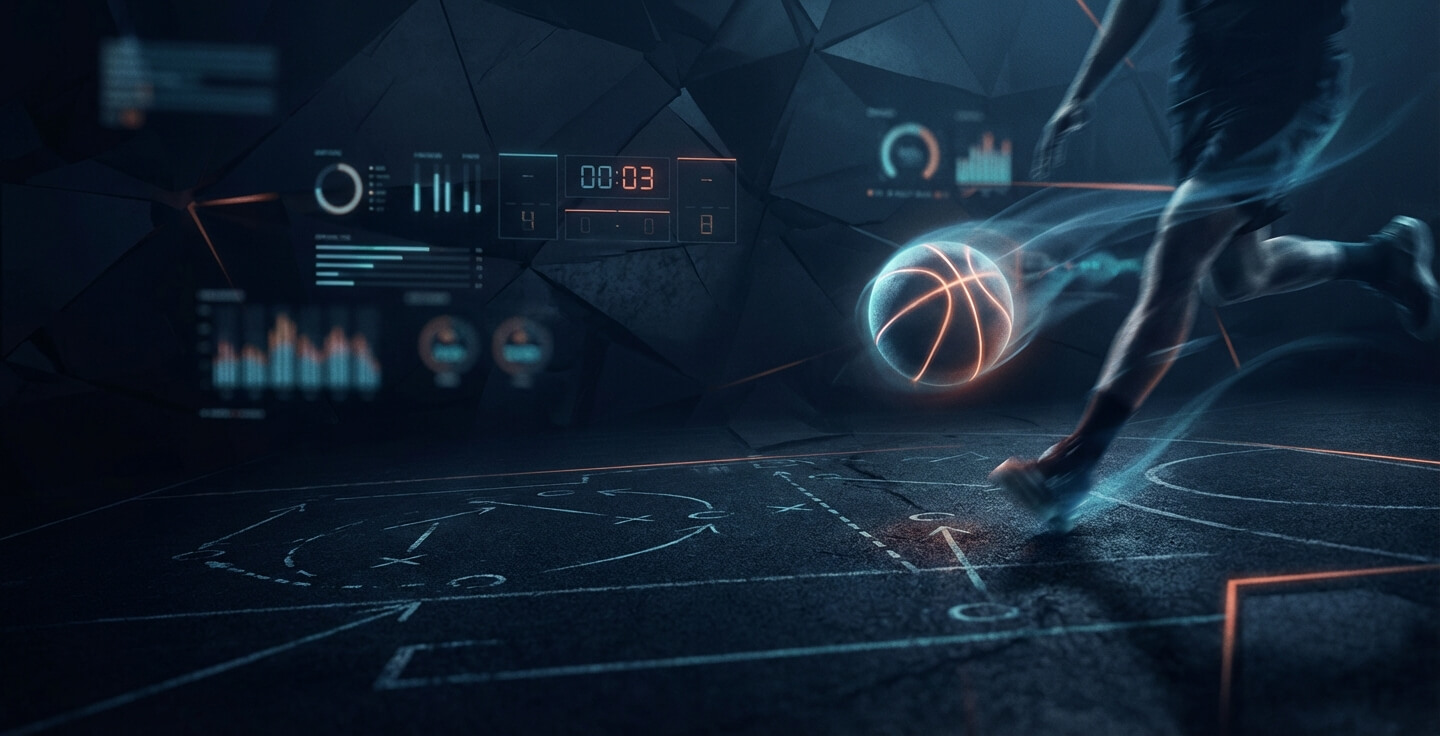
Improve Your Basketball Game: Master Skills, Drills & Strategies
Are you ready to transform your performance on the court? Whether you're a beginner aiming for your first consistent jump shot or an experienced player looking to refine your strategic edge, mastering basketball requires dedication and the right approach. This comprehensive guide will equip you with proven techniques, effective drills, and advanced strategies to significantly elevate your game. Get ready to enhance your skills, boost your confidence, and become the player you've always aspired to be.
The Fundamentals Are Key: Building Your Basketball Foundation
Every great basketball player, from local league legends to NBA superstars, builds their success on a strong foundation of fundamental skills. Neglecting these basics will inevitably limit your potential. By dedicating time to mastering shooting, dribbling, and passing, you create the bedrock upon which all advanced play is built. Let's dive into the core components that will set you apart.
Shooting Accuracy: Techniques for Every Shot
Shooting is arguably the most exciting and critical skill in basketball. Developing a consistent and accurate shot requires understanding proper form and endless repetition. Focus on the acronym BEEF: Balance, Eyes, Elbow, Follow-through. Your feet should be shoulder-width apart, knees slightly bent, and your body squared towards the basket (or slightly open, depending on your comfort). Keep your eyes fixed on the rim, and ensure your shooting elbow is tucked directly under the ball. The follow-through is crucial, extending your arm towards the hoop like you're reaching into the cookie jar.
Beyond the standard jump shot, mastering layups, free throws, and three-pointers will make you a versatile scoring threat. Practice different shot types from various spots on the floor. Develop a quick release and learn to shoot off the dribble as well as catch-and-shoot situations. Consistency, not just power, is what makes a great shooter.
- Balance: Maintain a stable base with knees bent, ready to explode upwards.
- Eyes: Keep your gaze locked on the front of the rim throughout the shot.
- Elbow: Keep your shooting elbow aligned under the ball, pointing towards the basket.
- Follow-Through: Extend your wrist and fingers, "snapping" the ball with backspin.
- Footwork: Learn to set your feet quickly for a balanced shot, whether off a catch or a dribble.
Table 1: Essential Shooting Drills & Their Skill Focus
| Drill Name | Primary Skill Focus | Description | Reps/Sets (Suggested) |
|---|---|---|---|
| Mikan Drill | Layups, Footwork, Touch | Alternate layups right and left, focusing on quick catches and soft finishes close to the hoop. | 3 sets of 10-15 per side |
| Form Shooting (Close) | Shot Form, Follow-Through | Shoot from directly under the basket, focusing solely on form, release, and follow-through. | 50-100 shots |
| Free Throws | Consistency, Pressure | Practice shooting free throws, focusing on routine and mental composure. | 30-50 shots (game pace) |
| Around the World | Range, Spot Shooting | Shoot from various spots (e.g., baseline, wing, top of key) on the court, moving after a make. | Complete 1-3 rounds |
| Catch & Shoot | Quick Release, Footwork | Receive a pass and immediately get into shooting motion, focusing on getting feet set quickly. | 50-75 shots (various spots) |
Remember that muscle memory is key for shooting. Consistent, deliberate practice will ingrain the correct mechanics, allowing you to execute shots fluidly under pressure. Don't be afraid to record yourself to identify areas for improvement.
Dribbling and Ball Handling: Mastery Through Repetition
Dribbling is your ability to control the ball while moving, essential for driving to the basket, creating space, and navigating defenses. Effective ball handling allows you to be a threat with or without the ball, opening up offensive possibilities. Focus on dribbling with your fingertips, keeping the ball low, and maintaining control with your head up. This allows you to survey the court, anticipate plays, and make smart decisions.
Incorporate a variety of dribbles into your practice: stationary dribbling (power dribbles, crossovers, between-the-legs, behind-the-back) to build confidence, and then dynamic dribbling where you move around the court, simulating game situations. Work on both your dominant and non-dominant hands equally. The goal is to dribble instinctively, without having to look at the ball, making you a much more dangerous offensive player.
- Fingertip Control: Use your fingertips, not your palm, to push the ball down and control its bounce.
- Low Dribble: Keep the ball below your waist for better control and protection from defenders.
- Head Up: Always dribble with your head up to see the court, teammates, and defenders.
- Crossovers: Practice changing direction quickly with effective crossover dribbles.
- Pound Dribble: Develop a strong, hard dribble that keeps the ball close and responsive.
- Two-Ball Dribbling: A great drill for developing ambidextrous control and coordination.
Repetition is the mother of skill in ball handling. The more comfortable you become with the ball, the more creative and effective you'll be in game scenarios. Dedicate at least 15-20 minutes of every practice session to fundamental and advanced dribbling drills.
Passing: Vision and Precision on the Court
Basketball is a team sport, and effective passing is the glue that holds an offense together. A great pass can break down a defense, create an open shot, or set up a teammate for an easy score. Passing requires not only mechanical precision but also court vision – the ability to anticipate where teammates will be and where defenders won't be.
Master the fundamental passes: the chest pass for quick, direct movement; the bounce pass to avoid defenders' outstretched arms; and the overhead pass for longer distances or to pass over smaller defenders. Always step into your passes, ensuring maximum power and accuracy, and follow through with your hands to the target. Practice no-look passes and wrap-around passes to add flair and unpredictability to your game.
- Chest Pass: Two hands, thumbs down, snapping motion, stepping into the pass.
- Bounce Pass: Aim two-thirds of the way between you and your target, allowing it to bounce up to their waist.
- Overhead Pass: Use two hands over your head, stepping into the pass for power and distance.
- Wrap-Around Pass: A deceptive pass that can bypass close defenders.
- No-Look Pass: Requires excellent court vision and practice to execute effectively and mislead defenders.
- Pass Fakes: Learn to fake a pass to draw a defender out of position before making the actual pass.
Work on improving your peripheral vision and understanding passing lanes. Practice passing to moving targets and anticipating cuts. Communication is also vital; tell your teammates where you want them to be or when you're passing. This collective understanding will significantly enhance your team's offensive flow.
Elevate Your Game: Advanced Strategies and Court IQ
Once you have a solid grasp of the fundamentals, it's time to elevate your game with advanced strategies and a higher court IQ. Basketball isn't just about individual skill; it's a chess match played at high speed, requiring players to understand offensive sets, defensive schemes, and transition opportunities. Developing your basketball intelligence will make you a more impactful and versatile player, capable of influencing the game beyond just scoring.
Offensive Strategies: Unleashing Your Scoring Potential
Understanding offensive strategies allows you to play within a system, maximize your strengths, and exploit defensive weaknesses. While individual heroics are thrilling, consistent scoring comes from disciplined execution of plays and smart decision-making. Learn about concepts like spacing, timing, and screening.
- Pick and Roll: A two-player offensive action where one player sets a screen for a ball-handler, then rolls to the basket. Mastering this can create open shots or driving lanes.
- Give and Go: Pass the ball to a teammate, then quickly cut to the basket, expecting a return pass for an easy score. This exploits defenders who lose track of off-ball movement.
- Triangle Offense: A complex system based on constant movement, passing, and specific spacing to create triangles on the court, generating open shots and driving lanes.
- Motion Offense: Emphasizes continuous player and ball movement, cutting, screening, and passing to create opportunities without rigid set plays.
- Isolation Plays: Clearing one side of the court for a skilled offensive player to attack their defender one-on-one.
Beyond structured plays, develop your ability to read your defender. Use jab steps, pump fakes, and hesitations to keep them off balance. Learn to attack closeouts and drive to the basket with purpose. Your offensive game should be diverse, incorporating drives, mid-range jumpers, and three-pointers to keep the defense guessing. Understanding shot selection is also crucial – take high-percentage shots and avoid forcing contested ones.
Defensive Principles: Stopping Your Opponents Cold
Great offense wins games, but great defense wins championships. Becoming a lockdown defender requires discipline, effort, and understanding defensive schemes. Your stance, footwork, and communication are paramount. Stay low, slide your feet, and keep your hands active to contest shots and passes. Defense is a team effort; no single player can stop an entire offense.
- Man-to-Man Defense: Each defender is responsible for guarding a specific offensive player. Focus on staying between your man and the basket, denying easy passes and drives.
- Zone Defense: Defenders guard an area of the court rather than a specific player. Requires excellent communication and anticipation to cover gaps and rotate effectively.
- Help Defense: Crucial in both man and zone. When a teammate's man beats them, another defender steps in to stop the penetration, forcing the ball handler to pass.
- Closeouts: Approaching an offensive player with the ball quickly but under control, chopping your feet as you get close to avoid getting blown by.
- Rebounding: Boxing out your opponent and securing the rebound is the final act of a good defensive possession.
Work on your defensive stance: knees bent, weight on the balls of your feet, arms out to deter passes. Practice shuffling drills to improve your lateral quickness. Learn to anticipate offensive plays and disrupt passing lanes. Communication on defense is non-negotiable; call out screens, warn teammates of cuts, and signal rotations. A vocal defense is often an effective defense.
Transition Play: Mastering Speed and Execution
Transition offense and defense are often overlooked but are critical components of high-level basketball. The ability to quickly shift from defense to offense, or vice-versa, can swing momentum and create easy scoring opportunities. Speed, decision-making, and communication are key in transition.
- Fast Break: After securing a defensive rebound or turnover, quickly pushing the ball upcourt to score before the defense can set up. This involves a primary ball-handler, a wing runner on each side, and a trailing player.
- Secondary Break: If the initial fast break isn't available, quickly flowing into a structured offensive set without allowing the defense to fully recover and settle.
- Transition Defense: Sprinting back on defense immediately after a shot or turnover to prevent easy fast-break points for the opponent. This involves stopping the ball, finding the closest offensive player, and communicating.
Practice specific drills that emphasize sprinting, outlet passes, and quick decision-making in fast break situations. Understand the lanes: the ball-handler up the middle, wings wide. On transition defense, the "safety" player must always be aware to stop the ball, while others match up. Never walk the ball up the court; always look to push the pace. This puts immense pressure on the opposing team and creates more scoring chances for you.
Physical and Mental Conditioning: The Unseen Edge
Compare Best Odds →Talent and skill are important, but without the physical and mental fortitude to sustain high-level performance, your game will suffer. Basketball is a demanding sport that requires bursts of speed, endurance, agility, and the ability to stay focused under pressure. Investing in your physical conditioning and mental toughness will give you a significant advantage, allowing you to play harder, longer, and smarter than your opponents.
Strength and Agility Training for Basketball
Basketball players need a specific type of strength – functional strength that translates directly to explosive movements, jumping, and absorbing contact. Agility is also paramount for quick changes of direction, defensive slides, and creating separation. Incorporate a balanced training program that includes cardiovascular endurance, strength training, and plyometrics.
- Cardiovascular Training: Interval training (sprinting, jogging, walking cycles) mimics game demands better than steady-state cardio. Aim for 3-4 sessions per week.
- Strength Training: Focus on compound movements like squats, deadlifts, lunges, and presses. These build overall strength and power relevant to basketball. Target core strength for stability and balance.
- Plyometrics: Jump training (box jumps, broad jumps, vertical jumps) to improve explosiveness and vertical leap. Start with lower intensity and build gradually to prevent injury.
- Agility Drills: Cone drills, ladder drills, and shuttle runs improve your ability to change direction quickly and efficiently.
Table 2: Essential Agility Drills for Basketball Players
| Drill Name | Primary Skill Focus | Description | Equipment | Sets/Reps (Suggested) |
|---|---|---|---|---|
| Lane Agility Drill | Lateral Movement, Direction Change | Start at baseline, shuffle to free throw line, sprint to opposite free throw line, shuffle to opposite baseline, sprint back to start. | Basketball court | 3-5 sets, 2-3 reps each |
| T-Drill | Forward, Lateral, Backward Movement | Sprint forward, shuffle right, shuffle left, shuffle back to center, backpedal to start. | 4 cones | 3-5 sets, 2-3 reps each |
| Dot Drill | Foot Speed, Coordination, Quickness | Perform various foot patterns (e.g., up-and-back, left-to-right) on a pattern of 5 dots. | Dot mat or drawn dots | 3-5 sets, 30-60 seconds each |
| Suicides (Sprints) | Acceleration, Deceleration, Endurance | Sprint to various lines (e.g., free throw, half-court, opposite free throw, opposite baseline) and back. | Basketball court | 3-5 sets, 1-2 reps each |
Always incorporate a dynamic warm-up before training and a cool-down with stretching afterward to prevent injuries. Consistency is vital; regular training will yield the best results.
Mental Toughness: Focus, Confidence, and Resilience
The mental aspect of basketball is as important as the physical. How you handle pressure, setbacks, and fatigue can determine your performance. Mental toughness is the ability to perform at your best, even when things are difficult, maintaining focus, confidence, and resilience.
- Visualization: Before games or practices, visualize yourself executing plays perfectly, making shots, and playing strong defense. This builds confidence and prepares your mind.
- Goal Setting: Set both short-term (e.g., "make 100 free throws this week") and long-term (e.g., "improve my shooting percentage by 5%") goals. This provides direction and motivation.
- Positive Self-Talk: Replace negative thoughts with positive affirmations. Encourage yourself, especially after mistakes. Everyone makes errors; the key is how you respond.
- Dealing with Pressure: Practice mindfulness and breathing techniques to stay calm under pressure. Focus on the present moment, not the outcome.
- Learning from Mistakes: Don't dwell on errors. Analyze what went wrong, learn from it, and immediately shift your focus to the next play.
- Discipline: Sticking to your training regimen and game plan, even when you don't feel like it, builds mental fortitude.
Develop a pre-game routine that helps you get into the right mental state. During games, learn to quickly "flush" mistakes and move on to the next possession. Confidence comes from preparation; the more you practice and train, the more assured you'll feel when it counts.
Nutrition and Recovery: Fueling Peak Performance
Your body is a high-performance machine, and like any machine, it needs the right fuel and adequate maintenance. Proper nutrition and sufficient recovery are non-negotiable for basketball players aiming for peak performance and injury prevention. What you eat and how you recover directly impact your energy levels, stamina, and ability to repair muscle tissue.
- Balanced Diet: Focus on a diet rich in complex carbohydrates (for sustained energy), lean proteins (for muscle repair and growth), and healthy fats (for overall health and hormone function).
- Hydration: Drink plenty of water throughout the day, especially before, during, and after practice and games. Dehydration significantly impairs performance and increases injury risk.
- Pre-Game Fuel: Consume easily digestible carbohydrates 2-3 hours before a game to top off energy stores. Avoid heavy, fatty foods.
- Post-Game Recovery: Within 30-60 minutes after intense activity, consume a mix of carbohydrates and protein to replenish glycogen stores and initiate muscle repair.
- Sleep: Aim for 7-9 hours of quality sleep per night. Sleep is when your body repairs itself, consolidates learning, and produces growth hormones. It's often the most underrated aspect of recovery.
- Active Recovery: Light activities like walking, foam rolling, or gentle stretching on off-days can improve blood flow and reduce muscle soreness.
Work with a nutritionist if possible to develop a personalized meal plan. Avoid processed foods, excessive sugar, and unhealthy fats. Prioritizing sleep and proper hydration can often provide a bigger boost to your game than any single drill or workout.
Drills for Every Skill Level: Practice Makes Perfect
Theory is nothing without practice. Incorporating targeted drills into your routine is how you translate knowledge into skill. Consistency is more important than duration; regular, focused practice sessions yield better results than sporadic, long ones. Here are a few examples of drills that you can integrate into your training, building upon the fundamentals and strategic concepts discussed.
- "Star Shooting" Drill (Shooting Accuracy): Set up at five spots around the three-point line (both corners, both wings, top of the key). Take 5-10 shots from each spot. Focus on proper form and quick release. Move clockwise or counter-clockwise. This builds range, conditioning, and consistency from various areas on the court.
- "Cone Dribbling Course" (Ball Handling Mastery): Set up 5-7 cones in a zig-zag pattern. Dribble through the cones using different moves (crossovers, between-the-legs, behind-the-back). Focus on keeping the ball low and your head up. Challenge yourself to increase speed while maintaining control. Do this with both your dominant and non-dominant hand.
- "Three-Man Weave" (Passing & Transition): With three players, start at one baseline. The middle player passes to a wing, cuts behind them, and receives a pass from the other wing. Continue weaving down the court, ending in a layup or jump shot. This develops fast-break passing, timing, and court awareness. If you have fewer players, adapt by passing off a backboard or wall.
- "Defensive Slides & Closeouts" (Defensive Principles): Start at half-court. Simulate defending a ball handler by sliding laterally to the three-point line. Then, practice a proper closeout to an imaginary shooter, chopping your feet, getting low, and having active hands. Focus on quick changes of direction and maintaining a low defensive stance.
- "Layup Finishes" (Attacking the Basket): Drive to the basket from different angles and practice various layup finishes: power layups, reverse layups, finger rolls, floaters, and euro-steps. This improves your ability to score effectively against different defensive challenges in the paint.
Remember to always push yourself slightly beyond your comfort zone. Practice doesn't make perfect; perfect practice makes perfect. Focus on quality over quantity, and break down complex skills into smaller, manageable components. Incorporate game-like situations into your drills to make them more relevant and engaging. Track your progress to stay motivated and identify areas that need more attention. Your commitment to these drills will directly translate into tangible improvements on the court.
Frequently Asked Questions About Improving Your Basketball Game
How often should I practice basketball to see improvement?
For significant improvement, aim for 3-5 dedicated practice sessions per week, in addition to any team practices or games. Consistency is more crucial than length. Even 30-60 minutes of focused, high-intensity drilling can be highly effective. If you can't get to a full court, focus on ball handling and conditioning at home or in a smaller space. Listening to your body and incorporating rest days is also vital to prevent burnout and injury.
What are the most important skills for a beginner to focus on?
Beginners should prioritize the core fundamentals: dribbling with both hands, proper shooting form, and accurate passing. These skills are the building blocks for everything else. Start by mastering stationary dribbling, close-range form shooting, and chest/bounce passes. Once comfortable, gradually introduce movement and speed. Developing a strong defensive stance and understanding basic footwork are also critical early on.
Can I improve my basketball game significantly by practicing alone?
Absolutely! Much of your individual skill development can happen alone. Solo practice is excellent for refining shooting mechanics, improving ball handling, working on footwork, and conditioning. Use a wall for passing drills if you don't have a partner. However, incorporating occasional scrimmages or team practices is essential for developing court vision, decision-making under pressure, and understanding team concepts.
How can I increase my vertical jump for basketball?
Increasing your vertical jump primarily involves dedicated plyometric training (jump training) combined with lower body strength training. Exercises like box jumps, broad jumps, depth jumps, and single-leg hops are effective. Compound lifts such as squats, deadlifts, and lunges build the necessary raw strength. Ensure proper form, progressive overload, and adequate rest between sessions. Consult a trainer for a safe and effective plyometric program.
What are common mistakes players make when trying to improve?
Common mistakes include practicing without purpose (just "shooting around"), neglecting weaknesses, relying solely on their dominant hand, ignoring physical conditioning, not getting enough rest, and having a negative mindset after mistakes. To improve, always practice with specific goals, work on both strengths and weaknesses, train both hands, prioritize fitness, ensure proper recovery, and cultivate a growth-oriented, resilient attitude.
Conclusion: Your Journey to Basketball Excellence
See Our Top Pick →Improving your basketball game is a journey of continuous learning, effort, and passion. By committing to mastering the fundamentals, understanding advanced strategies, and prioritizing your physical and mental conditioning, you're not just enhancing your skills – you're building a more confident, resilient, and intelligent player. Remember that every great athlete started with basics and built from there. Embrace the process, celebrate small victories, and stay dedicated to your goals. Get on the court, put in the work, and watch your game reach new heights. The journey to basketball excellence starts now!