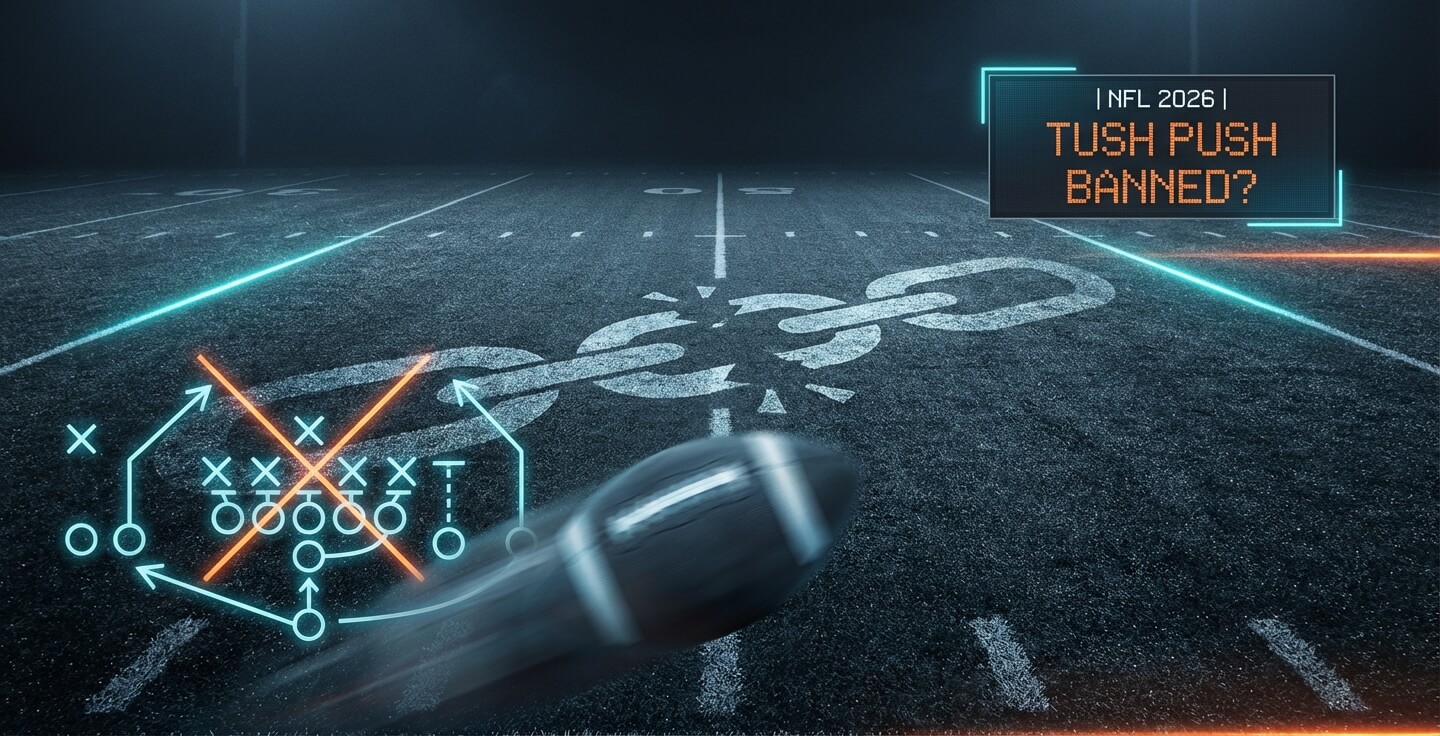
Tush Push Banned for 2026 NFL Season? Examining the Controversy and Future of the "Brotherly Shove"
The "Tush Push," officially known as the "Brotherly Shove," has revolutionized short-yardage situations in the NFL, but its future is increasingly uncertain. While incredibly effective, particularly for teams like the Philadelphia Eagles, the play has ignited a fierce debate among coaches, analysts, and fans regarding player safety and competitive fairness. As the league continually evaluates its rules, speculation is mounting that this polarizing maneuver could face a ban by the 2026 NFL season. Let's delve into the arguments for and against, its potential impact, and what a post-Tush Push NFL might look like for your favorite teams.
Best Sportsbooks for Betting
18+ | Sponsored content | Wagering requirements apply | T&C apply | BeGambleAware.org | Gamble responsibly
The Rise and Reign of the Tush Push (Brotherly Shove)
Emerging prominently during the 2022 NFL season, the Tush Push quickly became the league's most talked-about short-yardage play. While quarterback sneaks have been a staple of football for decades, the Tush Push adds a critical, controversial element: offensive linemen and other players explicitly pushing the ball carrier from behind to gain extra momentum. This seemingly simple modification transforms a risky, high-leverage play into an almost guaranteed conversion for teams with the right personnel.
The Philadelphia Eagles, spearheaded by quarterback Jalen Hurts and their formidable offensive line, perfected this technique, converting an astonishing percentage of their short-yardage attempts. Their success rate on 3rd or 4th & 1 using this play often approached or exceeded 90%, a figure previously unheard of for such critical downs. This dominance forced other teams to attempt to replicate the strategy, with varying degrees of success, further embedding the "Brotherly Shove" into the NFL's tactical landscape. The play capitalizes on a loophole in existing rules that permits players to push the ball carrier, provided they are not pushing from below the waist.
Statistically, the Tush Push has been a game-changer. It not only minimized turnovers in crucial situations but also allowed offenses to sustain drives, chew clock, and control the tempo of games in a way that was previously only achievable with more complex, riskier play calls. For teams with mobile quarterbacks and strong interior lines, it became an invaluable weapon, almost an automatic first down or touchdown from close range. Its effectiveness has been undeniable, reshaping short-yardage strategy across the league and sparking a philosophical debate about the essence of football itself.
The widespread adoption and success of the Tush Push illuminated a fascinating aspect of NFL innovation: how quickly a novel interpretation of existing rules can spread and impact the competitive landscape. What started as an Eagles' specialty quickly became a league-wide phenomenon, prompting defensive coordinators to frantically search for countermeasures, often in vain. This rapid integration into offensive schemes highlights both the ingenuity of NFL coaching staffs and the perpetual challenge for the league to maintain a balance between allowing strategic evolution and ensuring player safety.
Why the NFL is Considering a Ban: Safety Concerns and Fair Play Debate
Despite its effectiveness, the Tush Push has been under intense scrutiny from the NFL Competition Committee, coaches, and general managers almost since its inception. The primary drivers behind the discussions of a potential ban revolve around two critical areas: player safety and the overarching principle of competitive balance. These aren't new concerns for the NFL, a league that constantly tinkers with its rulebook to evolve the game while attempting to mitigate inherent risks.
Player Safety: The Primary Argument
The most vocal opposition to the Tush Push centers on the increased risk of injury it poses, particularly to the quarterback and the linemen involved. When multiple players converge in a tightly packed scrum, attempting to drive the ball carrier forward, the potential for dangerous pile-ups dramatically increases. Quarterbacks, typically the most valuable assets on any team, are at the epicenter of these collisions, often driven from behind into a wall of defenders. This situation could lead to:
- Head and Neck Injuries: With bodies driven forward and heads often down, there's a heightened risk of concussions, stingers, and other severe head and neck trauma. The sheer force of multiple players impacting one another, with the quarterback's head often exposed, is a significant worry.
- Lower Body Injuries: Knees, ankles, and feet can get twisted or trapped underneath the pile as players from both sides collapse into the mass. The unnatural angles and leverage created in these moments can lead to torn ligaments or broken bones, sidelining key players for extended periods.
- Increased Strain on Linemen: Offensive and defensive linemen are already engaged in high-impact collisions, but the added dynamic of pushing from behind adds another dimension of stress to their bodies, potentially exacerbating existing injuries or creating new ones. Their bodies are not designed for the sustained, collective push in this manner.
The NFL has a long-standing commitment to player safety, evident in numerous rule changes over the decades aimed at reducing dangerous hits and minimizing contact. Proponents of a ban argue that the Tush Push runs counter to this commitment, introducing an unnecessary and avoidable risk into the game. The argument is that while football is inherently dangerous, rules should mitigate *avoidable* dangers.
"Unfair Advantage" and Competitive Balance
Beyond safety, many in the league argue that the Tush Push creates an unfair competitive advantage that undermines the strategic diversity of short-yardage play. While skill and execution are always factors, the play's high success rate, particularly for teams with elite offensive lines and a strong, mobile quarterback, makes it feel almost unstoppable. This leads to concerns that:
- Reduced Strategic Variety: If one play is nearly guaranteed, it limits the need for creative play-calling in critical short-yardage situations, potentially making the game less dynamic and predictable. Teams are less likely to innovate if there's a "cheat code" for first downs.
- Personnel Disparity: Not all teams possess the unique combination of an exceptionally strong offensive line, a powerful center, and a robust, mobile quarterback like Jalen Hurts. This creates an uneven playing field where some teams can leverage this play more effectively than others, regardless of overall team talent. It becomes a specialized skill set rather than a universal tactical option.
- "Not Football": Some purists contend that the play resembles a rugby scrum more than traditional American football. They argue it deviates from the spirit of the game, where individual blocks and drives are paramount, rather than a collective, undifferentiated push. This argument touches on the aesthetic and philosophical foundations of the sport.
The NFL strives for competitive balance, and a play that disproportionately benefits a few teams, making it exceedingly difficult for others to defend or counter, raises questions about the integrity of the game's competitive structure. Critics argue that the Tush Push takes too much skill out of the equation for such a crucial down, turning it into a test of raw mass and leverage rather than football artistry.
Historical Precedent for Rule Changes
The NFL has a rich history of adjusting its rulebook in response to player safety concerns, competitive imbalances, or simply to evolve the game. The Tush Push controversy is far from unique. Historically, the league has banned or significantly modified plays that were deemed too dangerous or that gave an overwhelming advantage. Consider:
- The "Wedge" on Kickoffs (2009, 2018): Initially banned the formation of a wedge of three or more blockers on kickoffs due to severe collision injuries. Further modifications virtually eliminated dedicated kickoff returns, dramatically altering special teams play.
- Horse Collar Tackle (2005): Banned grabbing a player by the back of the shoulder pads or jersey and pulling them down, especially from behind, due to the high risk of ankle and knee injuries. This was a clear safety-driven change.
- Spearing/Targeting (Various): Continuous efforts to penalize or ban leading with the helmet, targeting defenseless players, and hits to the head and neck area have been central to the NFL's concussion protocol efforts.
- Pushing the Piler on Field Goals (1970s): While not exactly the same, there was a rule change to prevent teams from pushing their own players into the opposing line on field goal attempts, illustrating a historical aversion to mass human pushes.
These precedents demonstrate the NFL's willingness to make significant rule changes when a play is perceived to compromise player well-being or create an undesirable competitive dynamic. The debate around the Tush Push aligns perfectly with these historical motivations for rule modification, suggesting that a ban is not just possible, but perhaps even likely, given the league's past actions.
| Year Implemented | Rule Change/Play Affected | Primary Reason(s) | Impact on Game |
|---|---|---|---|
| 2005 | Horse Collar Tackle Banned | Player Safety (knee/ankle injuries) | Reduced severe lower-body injuries; defenders adapted tackling techniques. |
| 2009 | Wedge on Kickoffs Banned | Player Safety (high-speed collisions) | Significantly altered kickoff return strategy; led to fewer returns and touchbacks. |
| 2010 | Receiver Protection (Defenseless Player Rule) | Player Safety (concussions/head injuries) | Increased penalties for hits to defenseless receivers; changed defensive approaches and awareness. |
| 2018 | Lowering Helmet to Initiate Contact | Player Safety (head/neck injuries) | Controversial at first; aimed to reduce concussions; required technique adjustment for all players. |
| Proposed 2026 | Tush Push (Brotherly Shove) Ban | Player Safety (pile-up injuries), Competitive Balance | Expected to reshape short-yardage strategy; debated impact on QB play and offensive schemes. |
The Mechanics of a Ban: How the NFL Could Implement the Change
Should the NFL decide to ban the Tush Push, the process would follow the league's established protocol for rule changes. This isn't a unilateral decision by the Commissioner but rather a collaborative effort involving various stakeholders, culminating in a vote that ultimately determines the rulebook's evolution.
Rule Proposal and Voting Process
The journey for a rule change typically begins with the NFL Competition Committee. This committee, composed of general managers, coaches, and owners, meets regularly to review the state of the game, analyze player safety data, and discuss potential rule modifications. They would:
- Review Data: Analyze injury reports specifically related to the Tush Push, success rates, and comparative data from other short-yardage plays. This includes medical reports and statistical analysis to build a strong case.
- Gather Input: Solicit feedback from head coaches, player representatives, and medical experts. Player safety representatives from the NFL Players Association (NFLPA) would likely have significant input on this particular issue.
- Draft a Proposal: If a consensus forms, the committee would draft a specific rule change proposal, detailing exactly what actions would become illegal (e.g., "pushing the ball carrier from behind or assisting their forward progress by means of direct physical contact").
Once a proposal is drafted, it is then presented to the 32 NFL team owners during annual league meetings, typically in March. For a rule change to be adopted, it requires a three-quarters majority vote (24 out of 32 owners). This high threshold ensures that significant changes have broad support across the league, reflecting a shared vision for the game's future. The owners consider not only the football implications but also the financial, safety, and fan engagement aspects of any proposed rule, weighing the pros and cons meticulously before casting their votes.
Potential Phasing Out or Immediate Implementation
If a ban on the Tush Push is approved, the implementation could take a couple of forms, though typically rule changes are immediate. Given the nature of this play, impacting fundamental short-yardage strategy, it's highly probable that:
- Immediate Implementation: The rule change would likely take effect for the very next season following its approval (e.g., if approved in March 2025, it would apply to the 2025 season, making a 2026 ban plausible if discussions extend). This allows teams ample time during the offseason to adjust their playbooks, personnel decisions, and practice techniques. A two-year lead time would be generous but not unprecedented for major strategic shifts.
- Clear Communication: The league would issue clear guidelines and educational materials to teams, officials, and the media to ensure universal understanding and enforcement of the new rule. This includes examples of what is now illegal and what remains permissible for short-yardage pushes (e.g., pushing from the side vs. directly from behind, which might still be allowed if not directly assisting forward progress in a Tush Push manner).
Phasing out a ban is less common for safety-related issues, as the league typically acts decisively once a safety concern is identified and voted upon. The most relevant precedent would be the horse-collar tackle, which was banned outright for immediate enforcement, or the various kick-off rules which came into effect with little transition period. While some major rule changes have been tested in preseason or college football first, the immediate safety concerns of the Tush Push might accelerate a full ban.
Impact of a Tush Push Ban on NFL Teams and Strategy
Compare Best Odds →A ban on the Tush Push would send ripples throughout the NFL, forcing offensive coordinators to rethink their strategies, impacting roster construction, and challenging quarterbacks to adapt. The consequences would be felt unevenly across the league, with some teams needing to make more significant adjustments than others.
Quarterback Sneaks: A Lost Art or Evolving Play?
Without the assistance of a coordinated push from behind, the traditional quarterback sneak would revert to being a much riskier proposition. While still a viable play, its success rate would undoubtedly drop, especially in critical short-yardage situations on 3rd or 4th & 1. Quarterbacks would need to rely more on their individual strength, technique, and the initial surge of their offensive line to gain the necessary yardage. The days of simply having bodies push you forward would be over, placing a premium on QB vision and lower body drive.
This could lead to a resurgence of the "lost art" of the traditional sneak, where subtle reads, precise timing, and pure power were the keys to success. However, it also means teams might be less inclined to call a sneak in high-leverage moments, opting for other plays that offer a higher probability of conversion, even if they carry different risks. The calculation for risk versus reward on a traditional sneak would change dramatically, potentially shifting play-calling tendencies toward more diverse options.
Team Adjustments: Offenses and Coaching
The most immediate and significant impact would be felt by teams that have heavily relied on the Tush Push, most notably the Philadelphia Eagles. Their entire short-yardage philosophy, often seen as a cornerstone of their offensive identity under Jalen Hurts, would require a substantial overhaul. This would entail:
- Playbook Diversification: Developing new packages and schemes for 3rd and 4th & short, potentially involving more power runs, quick passes, or option plays. Creative solutions that were once overlooked due to the Tush Push's reliability would need to be unearthed and refined.
- Personnel Evaluation: Reassessing the need for specific personnel types who excel in Tush Push situations (e.g., certain offensive linemen or backup quarterbacks used for their pushing ability). Teams might place less emphasis on pure mass and more on agility and technique for short-yardage specialists.
- Coaching Adaptability: Offensive coordinators known for their Tush Push prowess would need to demonstrate their ability to innovate and adapt, devising equally effective but rule-compliant strategies. This would be a significant test of their strategic acumen and willingness to evolve.
Other teams that adopted the Tush Push to a lesser extent would also need to adjust, but perhaps less dramatically. The ban would effectively reset the playing field for short-yardage conversions, encouraging creative solutions across the league and potentially leading to a new wave of offensive ingenuity.
Fan Reaction and League Popularity
Fan reaction to a Tush Push ban would likely be mixed, reflecting the divided opinions already present:
- Safety Advocates: Many fans and former players would applaud the move, viewing it as a necessary step to protect players and preserve the long-term health of the game. They prioritize the well-being of athletes over a specific play.
- Purists vs. Innovators: Some traditionalists would welcome the return to more "pure" football, while others who appreciate strategic innovation might lament the loss of an effective and exciting play. This internal conflict among fans is a hallmark of sports rule changes.
- Eagles Fans: Would likely be the most vocal in their opposition, having witnessed firsthand the unparalleled success of the play for their team. For them, it's a competitive advantage that would be unfairly taken away.
Ultimately, the NFL's popularity is built on excitement and competition. While a ban might spark initial debate, the league's ability to adapt and for new strategies to emerge would likely ensure continued fan engagement. The conversation would shift from debating the legality of the Tush Push to discussing the next wave of offensive innovation, keeping the game fresh and engaging for its massive viewership.
Alternatives to the Tush Push: What Comes Next for Short Yardage?
Should the Tush Push be relegated to the NFL's history books, offensive coordinators will not simply abandon attempts to convert critical short-yardage situations. Instead, they will be forced to innovate and revert to, or refine, other time-tested strategies. The goal remains the same: secure a first down or touchdown when mere inches separate success from failure, but the methods will have to change dramatically.
- Traditional Quarterback Sneak: Without the push, the QB sneak still exists. It demands superb communication between the center and quarterback, a low pad level, and a powerful drive. Its success hinges more on raw strength and the offensive line winning the initial push without external assistance. It requires precision and individual execution.
- Power Runs and Goal-Line Packages: Expect a resurgence of true power running. Teams might lean more heavily on strong, downhill running backs, potentially utilizing fullbacks and extra tight ends to create larger blocking formations. The "I-formation" or other heavy personnel groupings could become more prevalent in these situations, prioritizing brute force and gap integrity.
- Play-Action Fakes: With defenses anticipating a run, play-action passes can be incredibly effective from short-yardage formations. A quick roll-out, a bootleg, or a slip screen could exploit aggressive defenders crashing the line of scrimmage, leading to easy completions or even touchdowns. The element of surprise becomes a critical component.
- QB Keepers and Designed Runs: Mobile quarterbacks, even without the Tush Push, will still be valuable assets. Designed QB runs, read-option keepers, or bootlegs can leverage a quarterback's athleticism to find open space on the perimeter or to cut back against an over-pursuing defense. These plays force defenses to respect the QB as a runner, opening up other options.
- Quick Pass Concepts: Slants, quick outs, and bubble screens can be effective ways to gain a yard or two, especially against soft coverage or blitz-happy defenses trying to stuff the run. These plays require precise timing and execution but carry less risk than a forced run up the middle, relying on quick reads and agile receivers.
- Innovation in Blocking Schemes: Coaches will dedicate significant time to developing new blocking schemes that maximize leverage and drive without illegally pushing the ball carrier. This could involve new pulling concepts, trap blocks, or intricate zone-blocking variations designed for maximum short-yardage gains, emphasizing technique and synchronized movement.
Ultimately, a ban would not eliminate short-yardage conversions but would shift the emphasis back to fundamental blocking, individual effort, and strategic misdirection. It would challenge offensive minds to be creative within the confines of the rulebook, potentially leading to a new era of diverse and exciting short-yardage plays that are both safer and more strategically nuanced.
| Play Type | Key Characteristics | Est. Conversion Rate (4th & 1) | Safety Concerns | Legality (Post-Ban) |
|---|---|---|---|---|
| Tush Push (Brotherly Shove) | QB drives forward with players pushing from behind. | 90%+ (Highly Effective) | High (pile-up injuries, QB vulnerability) | Illegal (Expected) |
| Traditional QB Sneak | QB dives forward, relying on O-line block; no direct push from behind. | 65-75% (Moderate) | Moderate (QB contact, less pile-up than Tush Push) | Legal |
| Power Run (RB up middle) | Running back carries, usually with FB/TE lead blocking. | 60-70% (Moderate) | Moderate (RB/Lineman collisions) | Legal |
| Play-Action Pass (Short) | Fake run, quick pass (slant, flat) to open receiver. | 60-70% (Moderate, higher if defender bites) | Low (compared to direct contact runs) | Legal |
| QB Keeper/Bootleg | Designed QB run to outside or cutback. | 55-65% (Moderate, relies on QB athleticism) | Moderate (QB exposed in open field) | Legal |
The Future of NFL Rulemaking: Balancing Innovation and Tradition
The ongoing debate surrounding the Tush Push is a microcosm of the NFL's perennial challenge: how to balance the need for player safety with the desire to preserve the game's competitive integrity and entertainment value. The league operates in a constant state of flux, reacting to new strategies, technological advancements, and evolving medical understanding. This dynamic tension ensures that football, while deeply rooted in tradition, remains a living, adapting sport.
Innovation, like the Tush Push, often pushes the boundaries of existing rules, forcing the league to re-evaluate what is permissible. Historically, these innovations, when deemed too dangerous or distorting, have led to significant rule changes. This cycle is critical for the long-term health and appeal of the sport. If the Tush Push is banned, it will signal the league's continued prioritization of player well-being, even if it means sacrificing a highly effective play that some teams have mastered.
Moving forward, the NFL Competition Committee will undoubtedly continue to monitor other emerging plays and techniques. The use of advanced analytics and medical data will play an even greater role in informing future rule proposals, moving beyond anecdotal evidence to data-driven decisions. The challenge lies in fostering an environment where teams can innovate and push strategic limits, while simultaneously ensuring that the game remains as safe as possible for its athletes, thereby protecting the league's most valuable assets. The Tush Push saga serves as a compelling reminder that the NFL rulebook is a living document, constantly evolving to meet the demands of a dynamic and physical sport.
FAQ: Your Questions About the Potential Tush Push Ban Answered
Is the Tush Push currently banned in the NFL?
No, the Tush Push is not currently banned in the NFL. As of the current season, it remains a legal play, though it has been subject to intense discussion and debate by the NFL Competition Committee, leading to strong speculation about a future ban, potentially by the 2026 season.
What are the main arguments against the Tush Push?
The primary arguments against the Tush Push are centered on player safety, particularly the increased risk of injuries for quarterbacks and linemen in dense pile-ups, and competitive balance, as some argue it gives an unfair advantage to teams with specific personnel, making the play almost unstoppable and reducing strategic variety in short-yardage situations.
Which teams benefit most from the Tush Push?
The Philadelphia Eagles have notoriously benefited the most from the Tush Push, perfecting it with quarterback Jalen Hurts and their dominant offensive line. Their nearly unmatched success rate on the play made it a signature part of their offense. Other teams with strong interior offensive lines and mobile, powerful quarterbacks have also adopted it with varying degrees of success, but none to the extent of the Eagles.
What other plays has the NFL banned or modified for safety?
The NFL has a history of banning or modifying plays for safety. Notable examples include the horse collar tackle (banned for knee/ankle injuries), the "wedge" formation on kickoffs (banned for high-speed collision injuries), and various rules targeting hits to defenseless players or leading with the helmet, all aimed at reducing concussions and severe trauma. These precedents highlight the league's proactive stance on player well-being.
How would a ban affect the Philadelphia Eagles' offense?
A ban on the Tush Push would significantly impact the Philadelphia Eagles' offense. They would need to overhaul a core part of their short-yardage strategy, develop new playbook options for critical downs, and potentially re-evaluate personnel decisions that capitalized on the play's effectiveness. It would require substantial innovation from their coaching staff to maintain their high conversion rates.
What are potential alternative plays for short-yardage situations?
Alternatives for short-yardage situations include the traditional quarterback sneak (without a push), power running plays with running backs and heavy personnel, play-action passes, designed quarterback keepers or bootlegs, and quick passing concepts like slants or bubble screens. Offensive coordinators would need to be creative in finding effective, legal alternatives that don't compromise player safety.
Conclusion: The Unfolding Saga of the Tush Push
See Our Top Pick →The "Tush Push" or "Brotherly Shove" has undeniably been one of the most polarizing and impactful plays in recent NFL history. While its effectiveness for critical short-yardage conversions is unmatched, the concerns surrounding player safety and competitive fairness are equally potent. The debate over its future highlights the NFL's ongoing commitment to evolving the game while safeguarding its athletes and ensuring a level playing field. Whether it's eventually banned for the 2026 season or modified, its saga underscores the delicate balance between innovation and tradition in professional football. Prepare for a future where strategic ingenuity will once again define success in those crucial inches.