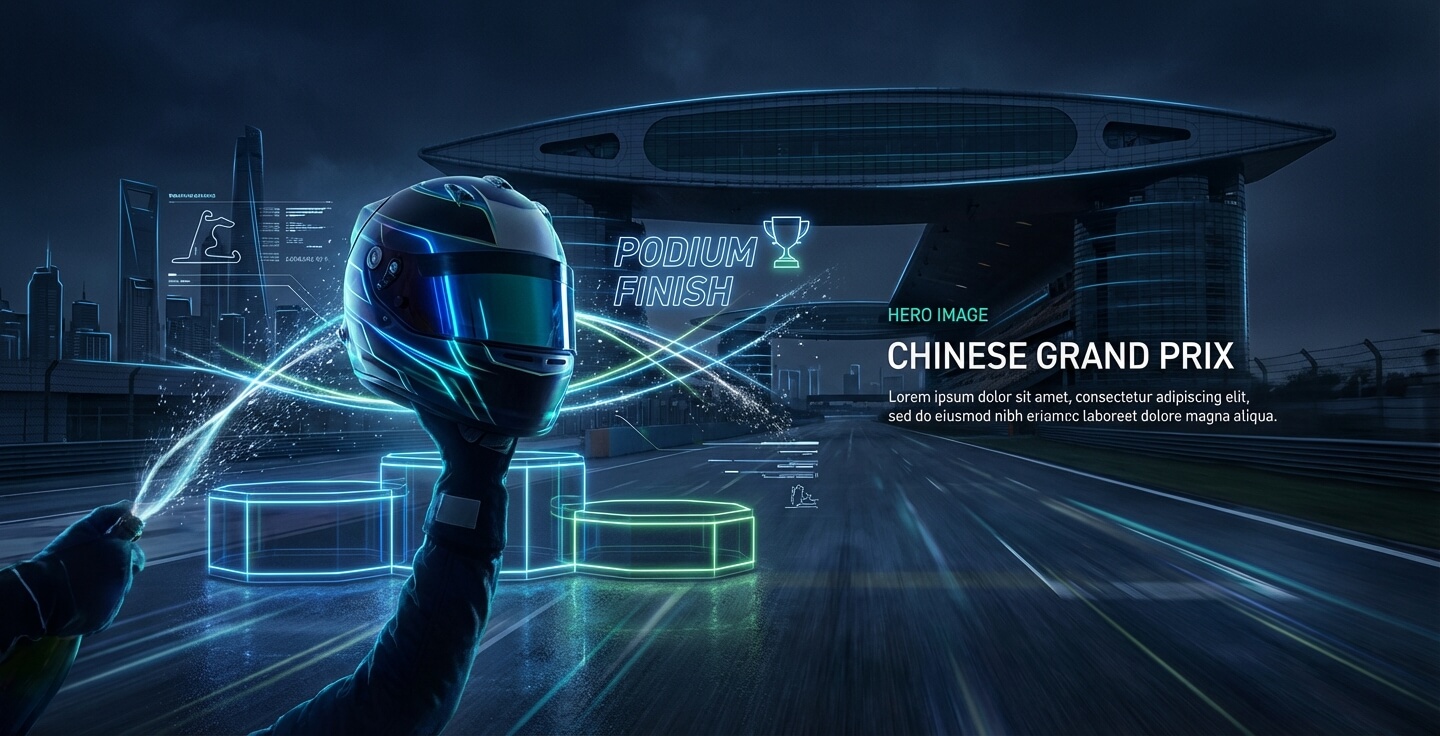
Chinese Grand Prix Podium Finishes: A Legacy of Thrills and Triumphs
The roar of engines, the scent of burning rubber, and the electrifying atmosphere of the Shanghai International Circuit — these are the hallmarks of the Chinese Grand Prix. Since its debut in 2004, this iconic race has consistently delivered breathtaking moments, none more coveted than a spot on the podium. For drivers and teams, a top-three finish here isn't just about collecting points; it's a testament to skill, strategy, and resilience on one of Formula 1's most demanding circuits. Dive into the history, the drama, and the sheer exhilaration of achieving a Chinese Grand Prix podium finish.
The Shanghai International Circuit: A Podium Contender's Battleground
The Shanghai International Circuit, designed by the legendary Hermann Tilke, is a marvel of modern motorsport engineering. Its unique "Yin and Yang" layout, with its long straights and challenging corners, demands a delicate balance from both car and driver. Securing a podium here requires mastery of every aspect of racing, from raw speed to meticulous tire management and strategic thinking. You'll often see the best rise to the occasion on this demanding track.
Track Characteristics and Driver Skill
The circuit is renowned for its specific challenges. The infamous Turn 1 and 2 combination, a seemingly endless right-hander that tightens into a left, is a masterclass in car control and tire preservation. Then there's the incredibly long back straight, stretching over 1.1 kilometers, which presents prime overtaking opportunities into the hairpin Turn 14. This mix of high-speed sections and technical corners puts a premium on a driver's ability to adapt and a car's versatility.
Drivers who consistently find themselves on the Chinese GP podium are those who can extract maximum performance in high-speed corners while also managing their tires through the long, sweeping turns. Precision is paramount, as even a minor mistake can cost crucial tenths and compromise race strategy. You'll notice that many F1 legends have a strong record here, proving that the circuit truly favors the most complete racers.
- Turn 1-4: A unique, spiraling complex demanding precision and tire care.
- Long Back Straight: Key for top-end speed and DRS overtaking.
- Tight Hairpins (T6, T14): Critical for braking stability and setting up passes.
- Flowing Mid-Sector: Requires excellent aerodynamic balance and driver confidence.
Weather Factors and Their Impact
Shanghai's weather can be unpredictable, adding another layer of complexity to the race weekend. From scorching sun to heavy downpours, the conditions often fluctuate, turning a straightforward race into a strategic gamble. Rain, in particular, has been a significant factor in several Chinese Grands Prix, leading to unexpected outcomes and unforgettable drives.
Wet conditions often level the playing field, emphasizing driver skill over raw car performance. You might see drivers who typically struggle suddenly shine, while favorites could falter. Team strategists must be on high alert, ready to make split-second decisions on tire choices and pit stop timings. A perfectly timed switch from wet to intermediate or dry tires can be the difference between a mid-pack finish and a coveted Chinese Grand Prix podium. This variability is part of what makes the race so compelling for fans and a true test for competitors.
Consider the impact:
- Rain: Reduces grip, increases spray, necessitates different tire compounds (intermediates, wets).
- Humidity: Can affect engine performance and driver fatigue.
- Temperature Fluctuations: Impacts tire degradation and optimal operating windows.
A Decade of Dominance: Notable Chinese GP Podium Finishers
Over the years, the Chinese Grand Prix has been a stage for some of Formula 1's biggest stars to shine. Certain drivers have consistently demonstrated an unparalleled affinity for the Shanghai circuit, etching their names into the history books with multiple wins and podium finishes. Understanding who excels here can often give you insights into future race predictions.
Key Drivers Who Excelled in Shanghai
When you look at the statistics, one name stands out prominently: Lewis Hamilton. The British driver has been remarkably successful in Shanghai, boasting the most wins and the most podium finishes. His ability to adapt to varying conditions and his exceptional race craft have made him a force to be reckoned with at this venue. Other drivers like Fernando Alonso and Sebastian Vettel also have impressive records, showcasing their versatility and skill.
These drivers weren't just fast; they demonstrated a profound understanding of the circuit's nuances, executing flawless strategies and making crucial overtakes when it mattered most. Their consistent presence on the podium underscores their status as F1 greats and their particular talent for mastering the Shanghai challenge. If you're looking for consistent performers, these names are always a good bet.
Top Drivers by Chinese Grand Prix Podium Finishes
This table highlights the drivers with the most visits to the Shanghai podium, showcasing their remarkable consistency at this challenging venue.
| Driver | Wins | Podium Finishes | Years on Podium (Selection) |
|---|---|---|---|
| Lewis Hamilton | 6 | 9 | 2007, 2008, 2011, 2014, 2015, 2016, 2017, 2018, 2019 |
| Fernando Alonso | 2 | 7 | 2005, 2006, 2007, 2010, 2011, 2013, 2014 |
| Sebastian Vettel | 1 | 6 | 2009, 2010, 2011, 2016, 2017, 2018 |
| Kimi Räikkönen | 1 | 5 | 2005, 2006, 2007, 2012, 2018 |
| Nico Rosberg | 1 | 4 | 2012, 2014, 2015, 2016 |
Unforgettable Podium Moments
The Chinese Grand Prix has given us numerous iconic podium ceremonies. From Hamilton's first win in 2008, a crucial step towards his maiden championship, to a thrilling three-way battle for victory, the excitement is palpable. Often, the emotion of a Chinese GP podium is amplified by the sheer drama that unfolded on track.
Think back to the strategic brilliance of a well-timed pit stop under safety car conditions, or a daring overtake in the dying laps that snatched a podium spot. These moments are etched into the memory of F1 fans globally. They remind us why we love the sport – the unpredictable nature, the relentless pursuit of perfection, and the ultimate reward of standing on that podium. You can always count on Shanghai to deliver such moments.
Strategy and Setup: Keys to a Podium Finish in China
Achieving a Chinese Grand Prix podium finish is never a stroke of luck; it’s the culmination of months of preparation, meticulous planning, and flawless execution. For teams, the focus begins long before the cars hit the track, ensuring the vehicle is perfectly optimized for Shanghai’s unique demands. For drivers, it’s about understanding how to extract maximum performance from their machinery while maintaining consistency and managing risks.
Tire Management: A Critical Factor
The Shanghai International Circuit is notoriously tough on tires, particularly the front-left due to the long, sweeping turns. This makes tire management a critical component of any successful strategy. Teams must carefully consider their tire choices for qualifying and the race, balancing the need for outright pace with the durability required to complete stints without excessive degradation. A two-stop strategy is often favored, but one-stop or even three-stop races aren't uncommon, especially if weather intervenes.
Drivers who excel at conserving their tires while maintaining competitive lap times often gain an advantage. You’ll frequently hear team radios discussing tire temperatures and wear, underscoring just how crucial this aspect is. Mismanaging tires can quickly drop a driver out of contention, making careful degradation monitoring essential for any hope of a Chinese GP podium.
- Front-Left Wear: High stress due to long right-handers.
- Compound Choices: Often a mix of medium and hard, or soft and medium depending on conditions.
- Degradation Rates: Key data point for strategists, influencing pit stop windows.
Pit Stop Precision and Timing
In a race where margins are razor-thin, a quick and precise pit stop can make all the difference. Losing even a second in the pit lane can mean dropping a position or falling behind a crucial rival. Teams practice pit stops relentlessly to achieve sub-two-second changes, turning it into a synchronized ballet of mechanics.
Beyond speed, the timing of a pit stop is paramount. An "undercut" (pitting earlier to gain track position on fresh tires) or an "overcut" (staying out longer for clear air) can dramatically alter the race dynamic. Safety Car periods often present opportunistic pit stop windows, allowing drivers to gain a "free" stop. Making the right call under pressure is a hallmark of successful teams aiming for the Chinese Grand Prix podium.
Remember, a perfect pit stop isn't just about the mechanics; it's about the strategists on the pit wall anticipating race flow and making brave decisions.
Overtaking Opportunities and Risks
The Shanghai circuit offers several genuine overtaking opportunities, primarily into Turn 1 and, more significantly, at the end of the long back straight into Turn 14. These spots, often aided by DRS (Drag Reduction System), are where drivers can truly showcase their bravery and skill.
However, overtaking always comes with risk. A misjudged move can lead to contact, a puncture, or even retirement. Drivers aiming for a Chinese GP podium must balance aggression with caution, knowing when to commit to a pass and when to bide their time. The ability to defend effectively and attack decisively is a key trait of those who consistently finish in the top three. You'll see drivers using slipstreams, late braking, and different racing lines to gain an advantage.
The Evolving Landscape: Recent Chinese GP Podium Trends
Compare Best Odds →Formula 1 is a sport of constant evolution, and the dynamics of podium finishes at the Chinese Grand Prix are no exception. New regulations, the emergence of fresh talent, and shifting team strengths mean that while history offers valuable lessons, you always need to look at the current form. The blend of seasoned veterans and rising stars continually reshapes the battle for those top three spots.
The Rise of New Talent
In recent years, the grid has seen an influx of incredibly talented young drivers who are not afraid to challenge the established order. These "young guns" bring a fearless approach and often adapt quickly to complex tracks like Shanghai. Their hunger for success frequently translates into bold overtakes and aggressive strategies, shaking up the traditional podium contenders.
For you, the fan, this means more unpredictable races and exciting new rivalries. As these drivers gain experience, their chances of securing a Chinese Grand Prix podium only increase. Keep an eye on those who show strong qualifying pace and consistent race craft, as they are often the ones poised to break through.
- Fresh Perspectives: New drivers often bring innovative lines and aggressive tactics.
- Learning Curve: Rapid adaptation to circuits like Shanghai is a hallmark of future champions.
- Increased Competition: A wider pool of talent means more drivers are capable of a podium finish.
Team Dynamics and Constructor Battles
Beyond individual driver prowess, the strength and strategy of the constructor play a pivotal role. The financial resources, engineering expertise, and strategic acumen of teams like Mercedes, Red Bull, and Ferrari often dictate who has the best chance of securing a Chinese GP podium. However, the gap between teams can narrow, especially with regulatory changes, leading to unexpected challengers.
The battle between constructors is not just about raw car speed but also about reliability, development pace, and pit wall decisions. A well-oiled team machine, capable of consistent performance and smart strategic calls, is often the backbone of multiple podium finishes. You'll observe how closely teams like McLaren or Aston Martin are pushing the established front-runners, creating thrilling constructor rivalries that directly impact podium outcomes.
Understanding these team dynamics is key to anticipating who might finish on the podium. Look at recent upgrades, engine performance, and how teams manage internal rivalries, as these factors all contribute to race day success.
Comparing Podium Performances: Chinese GP vs. Other Iconic Races
While every Formula 1 circuit presents its unique challenges, the Chinese Grand Prix stands out for its blend of long straights and intricate corners. Comparing its podium statistics and characteristics with other iconic races can offer a deeper understanding of what makes Shanghai special and highlight the versatile skills required for success here.
Different tracks favor different car setups and driving styles. For instance, high-speed tracks like Monza demand low-downforce setups, while Monaco requires maximum downforce and ultimate precision. Shanghai sits somewhere in between, requiring a well-rounded package. You'll find that drivers who are adaptable across various circuit types often perform well in China.
Constructor Podium Success: Chinese GP vs. Overall F1 Average (Example Data)
This table illustrates how some top constructors perform at the Chinese Grand Prix compared to their overall average podium rate in Formula 1, giving you an insight into their specific affinity or challenge with the Shanghai circuit.
| Constructor | Chinese GP Podiums (Total) | Average Chinese GP Podium Rate (%) | Overall F1 Podium Rate (Approx. %) | Notes |
|---|---|---|---|---|
| Mercedes | 13 | 72.2% | 60% | Strong dominance in the hybrid era. |
| Ferrari | 12 | 66.7% | 50% | Consistently strong, especially pre-2010s. |
| Red Bull Racing | 9 | 50.0% | 45% | Growing strength, especially with Verstappen. |
| McLaren | 10 | 55.6% | 40% | Historical successes, especially with Hamilton. |
| Williams | 2 | 11.1% | 25% | Less success in recent years at Shanghai. |
*Note: Podium rates are approximations based on historical data up to 2019 and can vary slightly based on exact race counts.
Similarities in Challenge
Like Spa-Francorchamps, Shanghai features long straights requiring powerful engines, but also technical sectors demanding high downforce. This hybrid nature means that a car that performs well in both high-speed and medium-speed corners often excels. You might notice that drivers who consistently achieve podiums at circuits that demand a complete package – good aero, good engine, good chassis – also fare well in China.
Furthermore, the high tire degradation seen in Shanghai is somewhat similar to what's experienced at tracks like Barcelona or Bahrain, where tire management is paramount. Therefore, teams and drivers with strong tire conservation strategies developed for those races often carry that advantage into the Chinese Grand Prix.
Unique Chinese GP Elements
What truly sets the Chinese Grand Prix apart is its distinct Turn 1-4 complex and the sheer length of its back straight. No other circuit combines such a long, tightening corner with such a prolonged DRS zone. This unique combination requires a specific car setup that balances front-end grip for the corners with minimal drag for the straight.
The variable weather also contributes to its unique character, often making it more of a lottery than more predictable venues. You'll rarely see a "boring" Chinese GP, precisely because of these elements. The circuit’s demand for a truly balanced car and a versatile driver makes a Chinese Grand Prix podium a distinct achievement, a marker of true excellence in the sport.
Your Guide to Predicting Chinese GP Podium Contenders
As an F1 enthusiast, you're always looking for an edge in predicting who will stand on that coveted Chinese Grand Prix podium. While Formula 1 is inherently unpredictable, there are several key factors you can analyze to make more informed predictions. By paying close attention to driver form, team performance, and race day variables, you can significantly enhance your understanding of potential outcomes.
Analyzing Driver Form and Momentum
A driver's recent performance is often the strongest indicator of their potential. Look beyond just race results; consider their qualifying pace, their ability to manage tires, and their consistency throughout a Grand Prix weekend. A driver who has been consistently finishing in the points or securing top-five finishes in previous races carries strong momentum into Shanghai.
Pay attention to how they perform in practice sessions. Are they comfortable with the car setup? Are they logging consistent, fast laps? Confidence is a huge factor in Formula 1, especially on a challenging track like Shanghai. A driver who looks confident and in rhythm during free practice is often a strong candidate for a Chinese GP podium.
- Recent Results: Consistent points finishes or strong qualifying performances.
- Confidence Levels: Demonstrated comfort with car and circuit during practice.
- Track Record: Past performance at the Chinese GP or similar track types.
Team Performance and Reliability
The car is as crucial as the driver. Evaluate the overall performance of the team in the current season. Are they consistently bringing upgrades? Are their engines reliable? A strong constructor provides its drivers with the best chance to compete for podiums. Mercedes, Red Bull, and Ferrari have historically dominated, but emerging teams can surprise.
Reliability is another non-negotiable factor. Even the fastest car won't make the podium if it retires due to mechanical issues. Track records for power unit reliability, gearbox issues, and other common failures can give you a clue. You want to back a team that not only has pace but also bulletproof engineering for the entire race distance.
Consider the team's strategic depth too. Do they make smart decisions under pressure? Are their pit stops consistently fast? A complete package—fast car, reliable engineering, and astute strategy—is essential for a Chinese Grand Prix podium finish.
Race Day Variables to Watch
Formula 1 is a dynamic sport, and race day variables can quickly turn predictions on their head. The most significant variable in Shanghai is often the weather. A sudden downpour can completely shuffle the grid and open opportunities for unexpected podium finishers. Keep an eye on the forecast, but also be ready for the unexpected.
Safety Car periods and Virtual Safety Cars (VSCs) are also game-changers. They can allow drivers to make "free" pit stops, close gaps, or even lose track position if timed poorly. The ability of a team to react decisively to these incidents is crucial. Look for teams with strong race strategists who can adapt to changing circumstances. Finally, the start of the race is always critical; clean getaways and aggressive but calculated moves in the opening laps can set the tone for a strong finish.
- Weather Changes: Rain or extreme temperature shifts.
- Safety Car Deployments: Crucial for strategic pit stops.
- First Lap Incidents: Can eliminate contenders or open up the field.
- Stewards' Decisions: Penalties can impact race results.
Frequently Asked Questions About Chinese GP Podiums
Has any Chinese driver finished on the podium at the Chinese Grand Prix?
As of the last Chinese Grand Prix held in 2019, no Chinese driver has finished on the podium at their home race. The most prominent Chinese driver in recent F1 history, Guanyu Zhou, debuted in 2022 and has yet to compete in a Chinese Grand Prix as the race was paused due to the global pandemic from 2020 to 2023. Fans eagerly await the day a Chinese driver can achieve this milestone.
Which driver has the most podium finishes at the Chinese Grand Prix?
Lewis Hamilton holds the record for the most podium finishes at the Chinese Grand Prix, with an impressive nine visits to the top three steps. He also holds the record for the most wins at this circuit, with six victories.
What is the significance of a podium finish in Formula 1?
A podium finish in Formula 1 is highly significant, representing a top-three result in a Grand Prix. It's not just about collecting championship points (25 for 1st, 18 for 2nd, 15 for 3rd); it's a huge boost to a driver's and team's morale, a testament to their performance, and a valuable marketing opportunity. For fans, it signifies an outstanding achievement in a fiercely competitive sport.
How does the weather typically affect podium outcomes in Shanghai?
Shanghai's weather can be unpredictable, often featuring rain, which significantly impacts podium outcomes. Wet conditions can level the playing field, making driver skill paramount and leading to unexpected podium finishers. Strategic calls on tire changes become crucial, and errors are more likely, adding an element of chance to the race. Historically, several memorable Chinese GPs have featured changing weather conditions.
Which teams have historically performed well on the Chinese GP podium?
Historically, Mercedes-AMG Petronas F1 Team has been exceptionally dominant in the hybrid era, securing numerous podiums and wins. Other teams with strong records include Ferrari and McLaren in earlier years, and more recently, Red Bull Racing has become a consistent threat for podium finishes in Shanghai. Their long-term success showcases their ability to adapt to the circuit's unique demands.
The Unforgettable Spectacle of the Chinese Grand Prix Podium
See Our Top Pick →The Chinese Grand Prix podium is more than just a ceremony; it's the culmination of speed, strategy, and sheer will power. From the demanding Shanghai International Circuit to the unpredictable weather, every element conspires to create a thrilling spectacle for you, the fan. As Formula 1 continues to evolve, the challenge of securing a top-three finish in China remains as potent as ever.
Whether it's a veteran extending their legacy or a rising star making their mark, each Chinese Grand Prix podium finish adds another chapter to the rich tapestry of this magnificent sport. Keep your eyes on Shanghai; it never fails to deliver heart-stopping action and unforgettable moments.