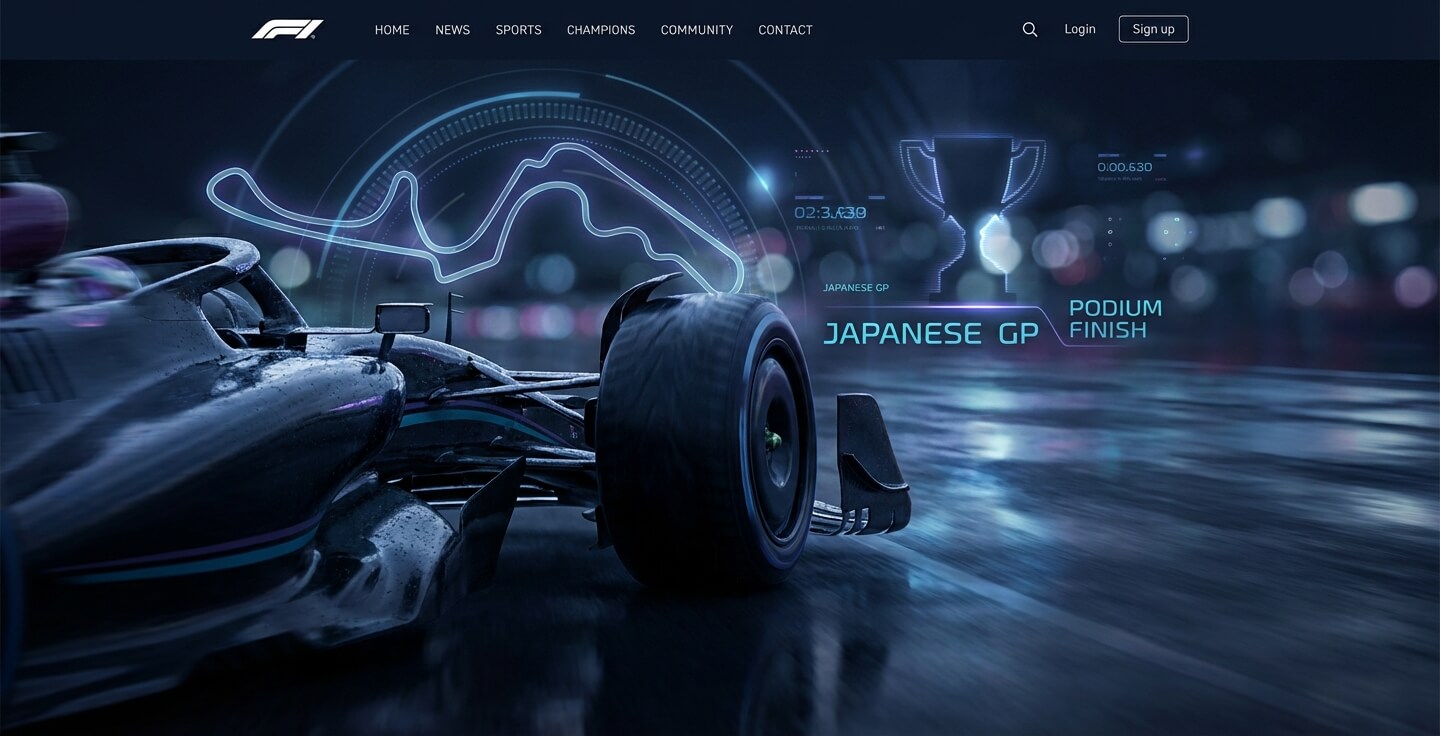
Conquering Suzuka: The Unforgettable Japanese Grand Prix Podium Finishes
Welcome to the heart of motorsport passion, where legends are made and dreams are realized. The Japanese Grand Prix at the iconic Suzuka Circuit is more than just a race; it's a spectacle of speed, precision, and drama. For drivers, a podium finish here isn't merely about points; it's about etching their name into the annals of Formula 1 history. This page delves into the rich tapestry of Suzuka's podiums, exploring the drivers, teams, and moments that define this incredible event. Prepare to relive the glory and understand what it truly takes to stand tall on one of motorsport's most coveted stages.
A Legacy of Excellence: The History of Japanese Grand Prix Podiums
The Japanese Grand Prix holds a storied place in Formula 1, often serving as a championship decider or a crucial battleground in the season's closing stages. First held in 1976, it quickly established itself as a demanding test of man and machine. Over the decades, the race has seen numerous iterations and locations, but it's the Suzuka Circuit that has truly become synonymous with its legacy.
From the dawn of its Formula 1 inclusion, the Japanese Grand Prix podium has been graced by an elite class of drivers. Early races often saw European stalwarts dominating, but as F1 globalized, a more diverse range of talent began to emerge. The design of Suzuka, with its unique figure-of-eight layout, guarantees a challenging race, meaning only the most skilled and resilient drivers reach the top three. This inherent difficulty elevates the prestige of a Suzuka podium finish significantly.
Early Dominance and Shifting Tides
In its formative years, particularly during the late 1980s and early 1990s when Suzuka became the permanent home, the Japanese Grand Prix witnessed intense rivalries, most notably between Ayrton Senna and Alain Prost. Their battles for championship glory often culminated on the Suzuka podium, creating some of the sport's most memorable and controversial moments. The podium back then felt like a stage for titans, embodying the raw, unfiltered competition of Formula 1.
As the sport evolved, so too did the cast of characters on the podium. The Schumacher era brought an unprecedented level of dominance, with Ferrari becoming a regular fixture in the top three. This period underscored the importance of team synergy and strategic brilliance alongside driver skill. You'll find that success at Suzuka is rarely accidental; it's the culmination of relentless effort and precise execution.
The Hybrid Era and Beyond
The introduction of the V6 turbo-hybrid engines in 2014 ushered in a new era of Formula 1, predominantly characterized by Mercedes-AMG Petronas's remarkable run. Lewis Hamilton, Nico Rosberg, and later Valtteri Bottas consistently found themselves on the Suzuka podium, showcasing the immense engineering prowess and consistent performance of their package. More recently, Red Bull Racing and Max Verstappen have asserted their dominance, continuing the tradition of legendary drivers conquering Suzuka.
Understanding this historical context helps you appreciate the profound significance of every driver who stands on the Japanese Grand Prix podium. It's not just a race; it's a chapter in the ongoing saga of Formula 1, continually redefining what it means to be a champion.
Legends Forged at Suzuka: Iconic Drivers on the Podium
Suzuka has a unique way of separating the good from the truly great. Only the best drivers consistently manage to tame its high-speed corners and demanding sections to clinch a podium spot. For many, a podium finish at the Japanese Grand Prix is a career highlight, a testament to their skill, bravery, and adaptability.
Schumacher's Reign
No discussion of Suzuka legends is complete without mentioning Michael Schumacher. The seven-time world champion had an extraordinary affinity for the Japanese circuit, showcasing some of his most brilliant drives here. His battles, particularly with Mika Hakkinen, are etched into F1 folklore, often ending with him spray-painting champagne from the top step. Schumacher's ability to consistently extract performance and manage races strategically made him a frequent visitor to the Suzuka podium, inspiring a generation of fans and drivers alike.
His meticulous approach to setup and unparalleled race craft allowed him to master Suzuka's technical challenges. You could always count on Schumacher to deliver a memorable performance, and often, a podium result, at this circuit.
Hamilton, Vettel, and Verstappen's Ascendancy
Following Schumacher's era, drivers like Lewis Hamilton and Sebastian Vettel took center stage. Hamilton, with his aggressive yet precise driving style, has numerous Suzuka podiums, often showcasing incredible overtakes and strategic masterclasses. Vettel, known for his relentless pursuit of victory, also enjoyed significant success, particularly during his Red Bull dominance, adding multiple Japanese GP podiums to his impressive tally.
In more recent times, Max Verstappen has firmly planted his flag at Suzuka. His audacious driving and ability to push the limits have seen him become a dominant force, securing consecutive victories and podium finishes. These drivers exemplify the modern F1 superstar – adaptable, blisteringly fast, and capable of performing under immense pressure, precisely what's needed to succeed at Suzuka.
Here’s a look at some of the drivers with the most podium finishes at the Japanese Grand Prix:
| Driver | Podium Finishes | Wins | Years Active (JP GP) |
|---|---|---|---|
| Michael Schumacher | 9 | 6 | 1991-2006, 2010-2012 |
| Lewis Hamilton | 8 | 5 | 2007-Present |
| Sebastian Vettel | 8 | 4 | 2007-2022 |
| Alain Prost | 7 | 2 | 1987-1993 |
| Fernando Alonso | 6 | 2 | 2001-Present |
| Ayrton Senna | 5 | 2 | 1987-1994 |
| Max Verstappen | 5 | 3 | 2015-Present |
This table clearly illustrates the caliber of drivers who consistently excel at Suzuka. Achieving multiple podiums here is a strong indicator of a driver's elite status in Formula 1.
Suzuka's Unique Challenge: Paving the Way to the Podium
The Suzuka Circuit is universally revered by drivers as one of the most thrilling and demanding tracks on the Formula 1 calendar. Its unique figure-of-eight layout, high-speed sections, and complex corner combinations create an unparalleled challenge, making any podium finish here a true badge of honor. To understand what makes a Suzuka podium so special, you need to grasp the circuit's intricacies.
The Esses and Degner Curves
The first sector of Suzuka, featuring the iconic 'Esses', is perhaps the most famous. It's a rapid, flowing sequence of S-bends that requires absolute precision, perfect balance, and unwavering commitment. Drivers must nail their entry, maintain rhythm, and carry immense speed through these corners to set up the rest of the lap. A mistake here can ruin a lap or even end a race. Similarly, the double-apex Degner Curves are notoriously tricky, demanding courage and a precise line. Mastering these sections is fundamental for any driver aspiring to the podium.
The speed and G-forces experienced through these sections are immense, pushing both car and driver to their absolute limits. The ability to maintain concentration and physical endurance here is paramount.
Strategic Tire Management
Beyond the pure driving challenge, Suzuka places immense strain on tires. The high-speed corners and abrasive track surface lead to significant tire degradation, particularly on the left-front. This makes tire strategy a crucial component of achieving a podium finish. Teams must meticulously plan pit stops, tire compounds, and stint lengths to ensure their drivers have enough grip to push throughout the race without overstressing the tires.
Drivers who excel at tire management often find themselves in a strong position in the closing laps, enabling them to either defend their podium spot or launch an attack. The delicate balance between speed and preservation is a constant tightrope walk at Suzuka, a factor you'll often hear commentators highlight during race broadcasts.
Team Triumphs: Engineering a Japanese Grand Prix Podium
Compare Best Odds →While driver skill is undeniable, no driver stands on the Suzuka podium alone. Behind every successful driver is a meticulously organized and incredibly talented team. Engineering brilliance, strategic foresight, and flawless pit stop execution are all critical components in securing a Japanese Grand Prix podium. Certain teams have historically shown a particular aptitude for Suzuka, consistently delivering top-tier performance.
Mercedes-AMG Petronas F1 Team
During the hybrid era, the Mercedes-AMG Petronas F1 Team built an almost unassailable record at Suzuka. Their dominant power unit combined with an aerodynamically efficient chassis allowed their drivers to consistently extract maximum performance from the challenging circuit. You'll recall numerous instances where their cars simply had an advantage that others couldn't match, resulting in multiple one-two finishes and a wealth of podiums. Their meticulous preparation and robust strategies were key to this sustained success.
The synergy between their drivers, engineers, and strategists was a masterclass in modern F1, making their cars formidable contenders for the podium year after year.
Red Bull Racing's Dominance
In more recent seasons, Red Bull Racing has emerged as the team to beat at Suzuka. With their Adrian Newey-designed cars, known for their exceptional aerodynamic grip, and the blistering pace of Max Verstappen, they have cemented their place at the top. Their cars often excel in the high-speed, flowing corners that define Suzuka, giving their drivers the confidence to push harder. The combination of a world-class chassis, powerful engine, and an exceptional driver like Verstappen has proven to be a winning formula for podium success.
They exemplify the modern approach to F1, where incremental gains in every department culminate in dominant performances, particularly on tracks like Suzuka that reward a balanced, high-performance package.
Here’s an overview of some of the most successful teams at the Japanese Grand Prix:
| Team | Podium Finishes | Wins | Constructor's Championships (Overall) |
|---|---|---|---|
| Ferrari | 28 | 7 | 16 |
| McLaren | 24 | 9 | 8 |
| Mercedes | 18 | 7 | 8 |
| Red Bull Racing | 15 | 7 | 6 |
| Williams | 14 | 3 | 9 |
| Benetton | 6 | 2 | 1 |
This table highlights the incredible efforts and long-standing commitments of these teams to excel at one of F1's most prestigious events. Their consistent presence on the podium is a testament to their engineering prowess and strategic acumen.
Memorable Moments: Races Defined by the Podium
Some of the most iconic moments in Formula 1 history have unfolded on the Suzuka Circuit, with the podium ceremony often serving as the emotional climax. These races aren't just about who finished where; they're about the narratives, the championship implications, and the sheer drama that captivates millions of fans worldwide. If you're a fan of F1 history, these races are essential viewing.
1988: Senna's First Championship
The 1988 Japanese Grand Prix is legendary for being the race where Ayrton Senna clinched his first World Championship. Starting from pole, Senna stalled on the grid, dropping to 14th. What followed was one of the greatest recovery drives in F1 history. He scythed through the field, engaging in a thrilling battle with Prost before eventually passing him to take the lead and the race win. The podium, with Senna taking the top step, was a moment of pure sporting triumph, solidifying his status as a future icon.
This race perfectly encapsulated the gladiatorial nature of F1, with the Suzuka podium serving as the ultimate validation of Senna's extraordinary talent.
2000: Schumacher vs. Hakkinen Showdown
Another truly unforgettable Japanese Grand Prix was in 2000, where Michael Schumacher and Mika Hakkinen battled for the championship. It was a winner-takes-all scenario, and the race delivered spectacularly. Schumacher emerged victorious, securing Ferrari's first Drivers' Championship in 21 years. The tension, the strategic plays, and the sheer speed displayed by both drivers made it a race for the ages. The podium celebration was charged with emotion, marking the end of a long wait for Ferrari and a monumental achievement for Schumacher.
Witnessing Schumacher atop that podium, draped in red, was a moment that sent shockwaves through the sport and resonated deeply with fans, especially those loyal to the Scuderia.
Recent Thrillers
More recently, Suzuka has continued to deliver high-stakes drama. The 2022 Japanese Grand Prix, despite being shortened due to rain, saw Max Verstappen clinch his second World Championship in dramatic fashion, initially not realizing he had secured the title until after the race. The weather conditions added an extra layer of challenge, proving that Suzuka can throw curveballs even to the most seasoned drivers. The podium, wet and wild, was another historic moment for the young Dutchman.
Each of these races, culminating in their respective podiums, tells a unique story of triumph, resilience, and the relentless pursuit of perfection that defines Formula 1. You can always count on Suzuka to deliver unforgettable moments.
The Road Ahead: Predicting Future Japanese Grand Prix Podiums
Looking to the future, the Japanese Grand Prix will undoubtedly continue its tradition of producing thrilling races and memorable podiums. With ever-evolving technical regulations, the emergence of new talent, and the established titans of the sport pushing the boundaries, predicting who will stand on the Suzuka podium is always an exciting challenge. As a fan, understanding these dynamics can heighten your race-day experience.
Rising Stars and Established Contenders
The current grid is filled with extraordinary talent. While established champions like Max Verstappen and Lewis Hamilton remain prime candidates for a podium finish, rising stars are consistently challenging the status quo. Drivers like Charles Leclerc, Lando Norris, and George Russell are increasingly demonstrating the pace and maturity required to conquer Suzuka. Their aggressive driving styles and hunger for victory ensure fierce competition for those coveted top-three spots.
The blend of seasoned veterans and hungry youngsters makes every Japanese Grand Prix a compelling watch, with the potential for unexpected heroes to emerge on the podium.
Impact of Technical Regulations
New technical regulations introduced in Formula 1 often reshape the pecking order, creating opportunities for teams to surge forward or fall back. These changes significantly impact car design, aerodynamics, and tire performance—all crucial factors at a demanding circuit like Suzuka. A team that perfectly interprets and optimizes for the regulations can find themselves with a dominant car, propelling their drivers to consistent podium finishes. Conversely, teams that struggle with regulation changes may find themselves fighting an uphill battle.
Keep an eye on how different teams adapt to regulatory shifts; it's often a key indicator of who will contend for the podium at technical tracks like Suzuka. The constant innovation in F1 means the competitive landscape is always shifting, making predictions both challenging and exciting.
Frequently Asked Questions About the Japanese Grand Prix Podium
Which driver has the most Japanese Grand Prix podium finishes?
Michael Schumacher holds the record for the most Japanese Grand Prix podium finishes, with a remarkable nine appearances on the rostrum. This includes six victories, further cementing his legendary status at Suzuka.
What makes Suzuka such a challenging circuit for drivers?
Suzuka's challenges stem from its unique figure-of-eight layout, high-speed, flowing corners like the 'Esses' and 'Degner Curves', and its demanding nature on tires. It requires extreme precision, high levels of commitment, and excellent tire management. The circuit offers very little margin for error, pushing drivers and cars to their absolute limits.
How important is qualifying for a podium finish at Suzuka?
Qualifying is highly important at Suzuka. While overtaking is possible, particularly in the later sectors, the narrow, high-speed nature of the track means track position is crucial. Starting from the front often provides a significant advantage, reducing the risks associated with battling through traffic and allowing drivers to manage their race and tires more effectively for a podium push.
Have any Japanese drivers achieved a podium finish at their home Grand Prix?
No Japanese driver has yet achieved a podium finish at the Japanese Grand Prix in Formula 1. While there have been talented Japanese drivers in F1, the top three spots at their home race have remained elusive.
What are the key strategies for securing a podium at Suzuka?
Key strategies for a Suzuka podium often involve a combination of excellent qualifying performance, robust tire management throughout the race (often a two-stop strategy), precise pit stop execution, and adapting to potential safety car periods or changing weather conditions. Fuel saving and managing engine modes also play a subtle but important role.
Conclusion: The Enduring Legacy of Suzuka's Podium
See Our Top Pick →The Japanese Grand Prix podium is more than just a platform for trophies; it's a hallowed ground where the pinnacle of motorsport achievement is celebrated. From the historical battles of Senna and Prost to the modern dominance of Verstappen, Suzuka has consistently delivered moments of unparalleled excitement and drama. The circuit's unique challenges ensure that only the most skilled drivers and meticulously prepared teams ever get to spray the champagne. As you follow future F1 seasons, remember the rich history and immense prestige associated with a Japanese Grand Prix podium finish. It remains one of the ultimate tests in Formula 1, and its legacy will continue to inspire generations of drivers and fans alike.